Share
Transforming Union Station for the future
The latest construction updates from the downtown Toronto station at the centre of the GO network
Dec 4, 2025
Union Station is the heart of the GO Transit network — a hub connecting people from across the region to work, home, and everything in between.
As Canada’s busiest transportation centre, it plays a vital role in keeping the region moving. To meet the needs of a growing population, this 100-year-old landmark is undergoing a major transformation to support more trains, more service, and a better customer experience.
Through the Union Station Enhancement Project , we’re modernizing the station while preserving heritage features — improving platforms, adding more access points, and building a new concourse that will make the station less crowded, more convenient, and more comfortable.
Here’s a look at the construction progress made on the project over the past year.
Concourse fit out
To support increased service levels, crews are building a new concourse that will seamlessly connect Bay and York Streets, provide additional access points to and from the platform levels above and maintain connections into the Bay, York, and VIA concourses, Union Square and Scotiabank Arena.
Crews began the fit out phase for the concourse in July 2025. This stage involves installing interior walls, lighting, flooring, ceilings, and the essential systems that keep the space running such as HVAC, plumbing, and electrical.
To make sure everything fits together smoothly, the team is using Building Information Modeling (BIM), a 3D digital model that helps visualize how all components interact before they’re physically put together. With this technology, they’re able to compare the digital model to real-world conditions to spot and fix potential design clashes early. This helps ensure the work stays on schedule.
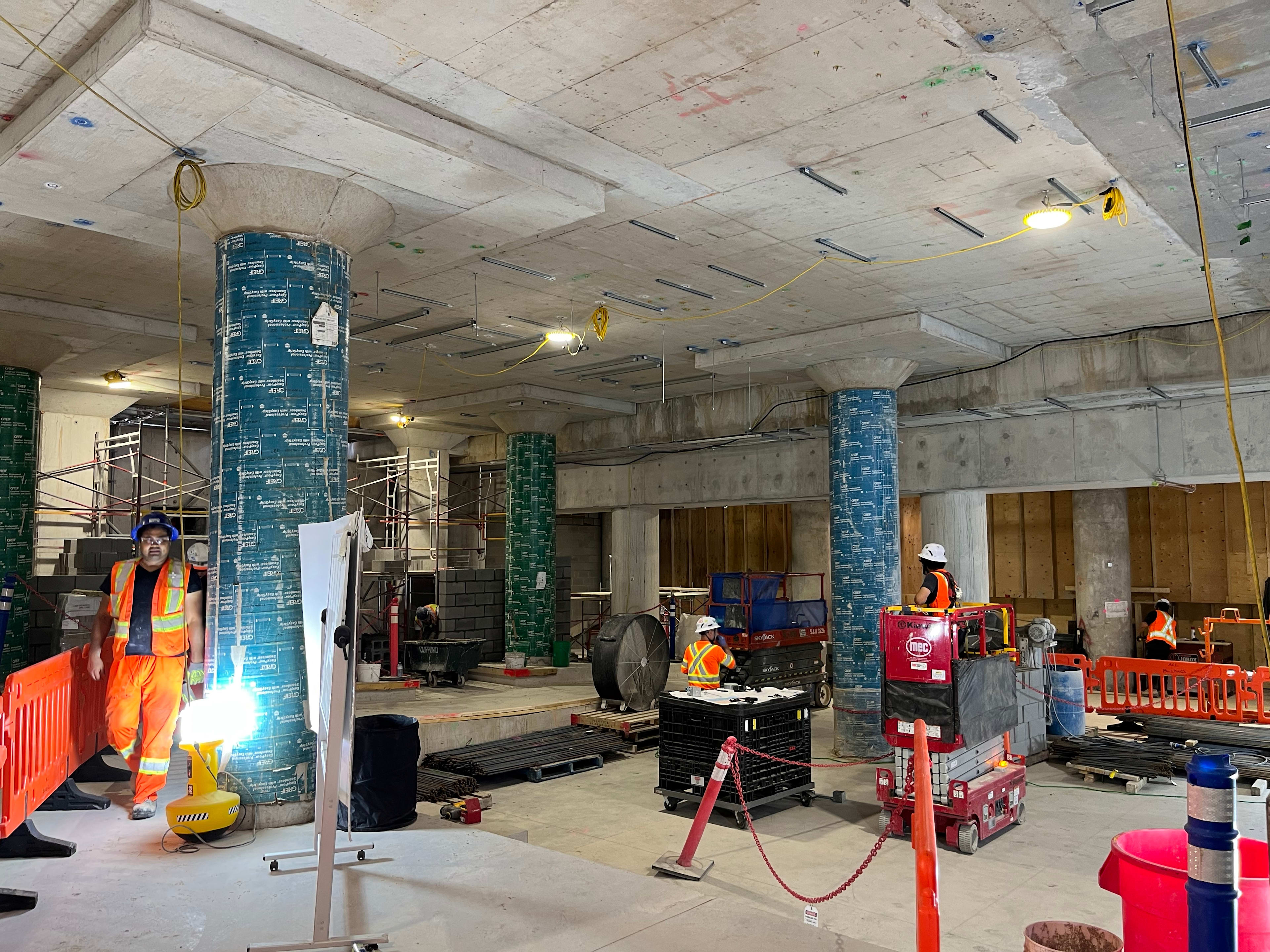
Crews are turning the space into a functional concourse that will improve the way people move through the station. (Metrolinx image)
Track slab pours
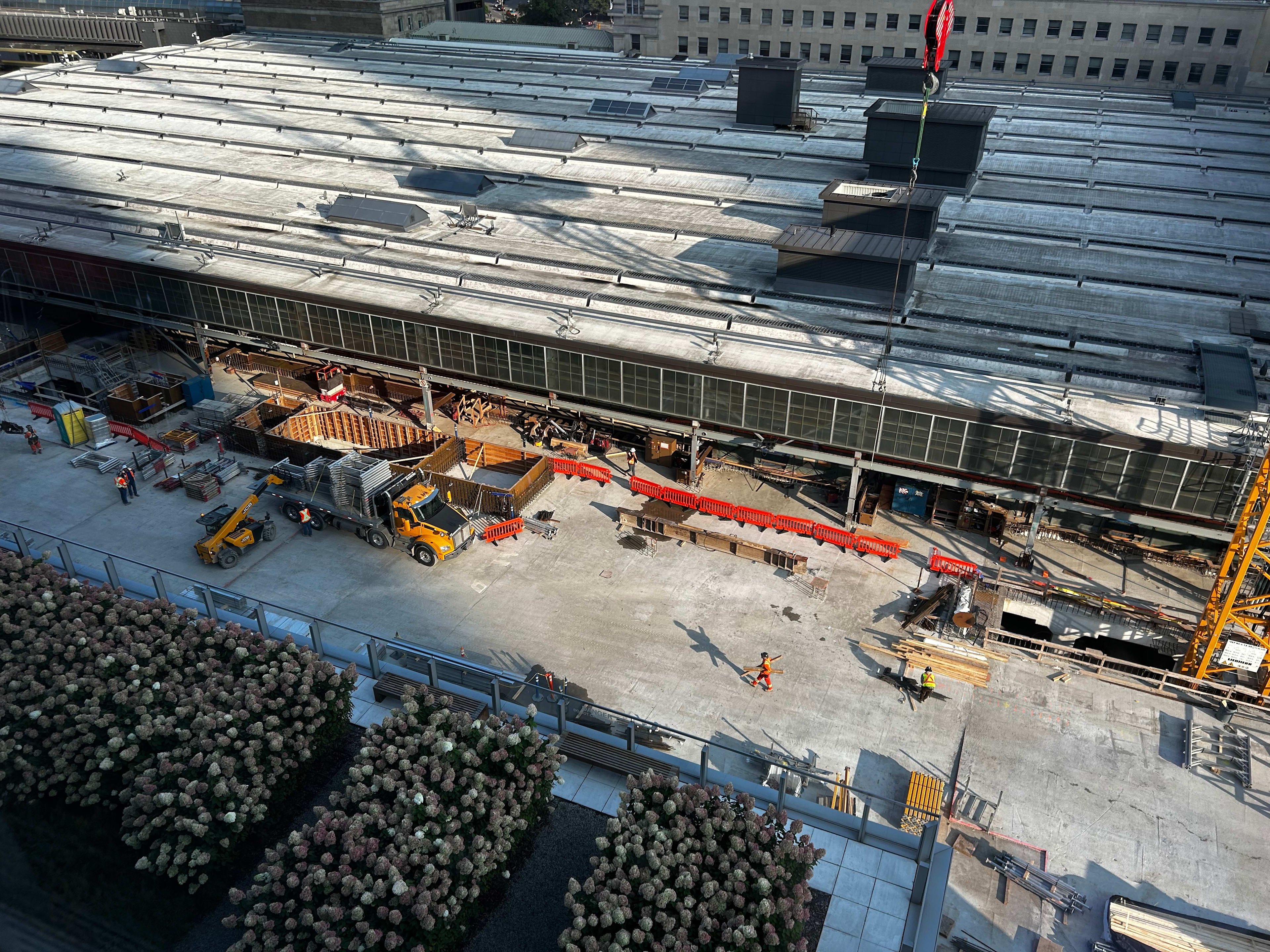
Over the course of the year, crews have been conducting multiple concrete pours that make up the new track slab, which will bring new, wider platforms and increased service levels across the GO network.
The pours are completed in sections and, after each one, the concrete is covered with tarps. It then needs to cure for nearly a month before it’s fully hardened because the slab is 80 cm thick. It’s built that thick so it can support the weight and vibration of future trains. For comparison, the average city sidewalk is around 10 cm thick.
On average, each concrete pour is about 550 m3, which is enough concrete to fill about 11 swimming pools.
Crews will continue to pour more slabs like this until the new concourse below is fully enclosed. Once complete, they will install new rail tracks to support increased service levels. This, plus extra stairs and elevators, will allow more passengers and trains to move through the station.

While it may just look like concrete, the track slab is a major part of ongoing work to upgrade Union Station to support increased service levels. (Metrolinx image)
Bridge lifts
East of Union Station, crews have been working to widen the rail bridges that pass over Lower Jarvis and Lower Sherbourne streets. In November 2025, they installed new bridge spans. These spans are comprised of a deck – the flat steel structure trains travel across – and a girder, which is the support beam under the deck.
The spans were assembled nearby and then lifted by a crane onto each bridge from the roadside. Each bridge span weighs over 130 tonnes, which is the average weight of a female Antarctic blue whale.
This will expand the rail corridor from six tracks to eight, making room for increased train service in the future.
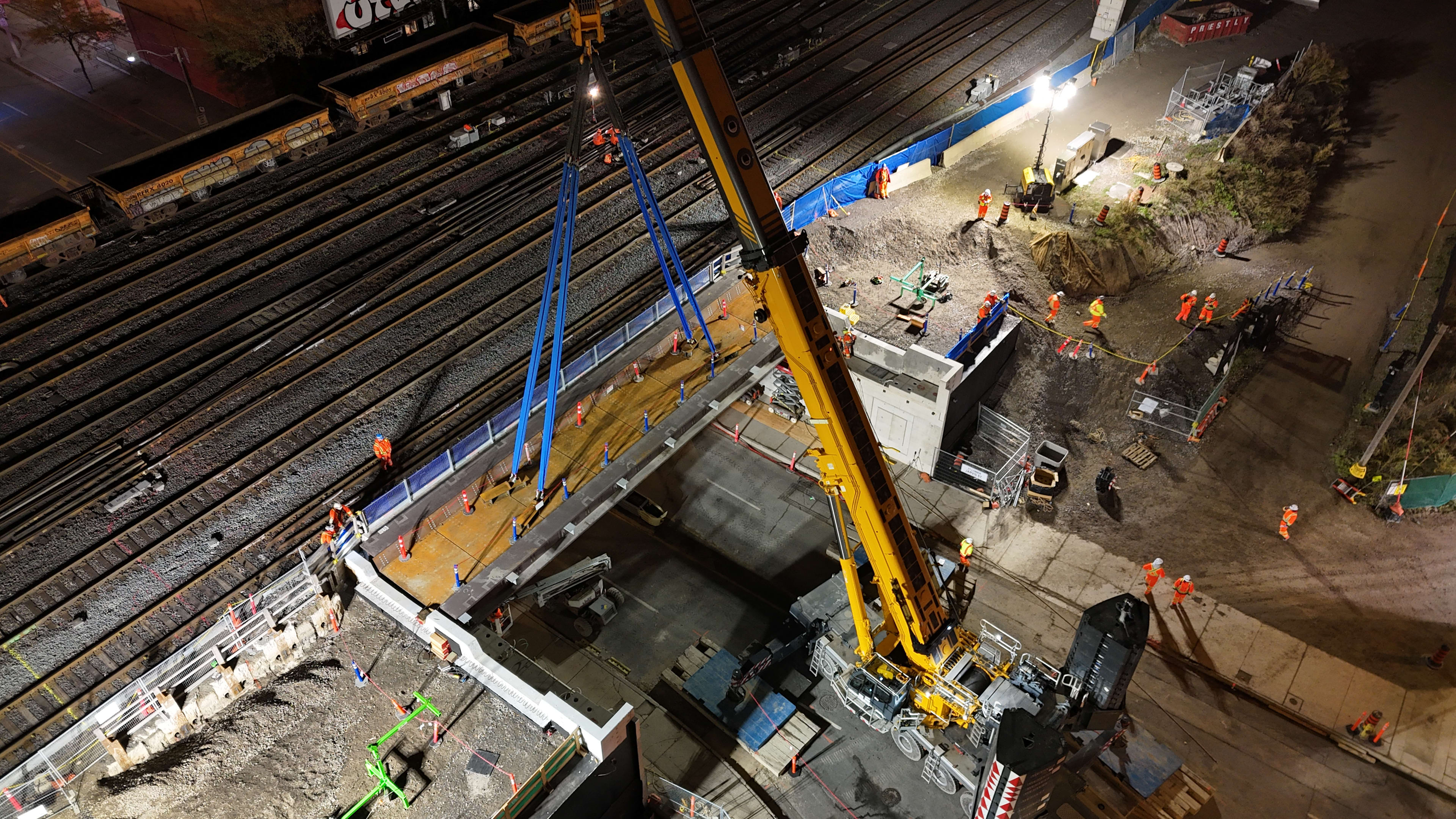
All of the steel for each bridge span was fabricated in Canada. (Metrolinx image)
Testing concrete and steel
The various rail bridges surrounding Union Station have been supporting trains since 1917, and crews have been testing their materials to ensure the infrastructure can support future service levels.
Because these bridges are in busy areas at the centre of the GO network, crews do most of the work overnight – testing, replacing, and cleaning up before the morning rush so commutes aren’t impacted.
When testing rebar, a small section is cut out, then replaced with tightened couplers to ensure the structure stays secure. They’re also conducting magnetic particle testing – a specialized, non-destructive method that uses magnetic fields and tiny particles to reveal any cracks or weak spots in metal bolts.
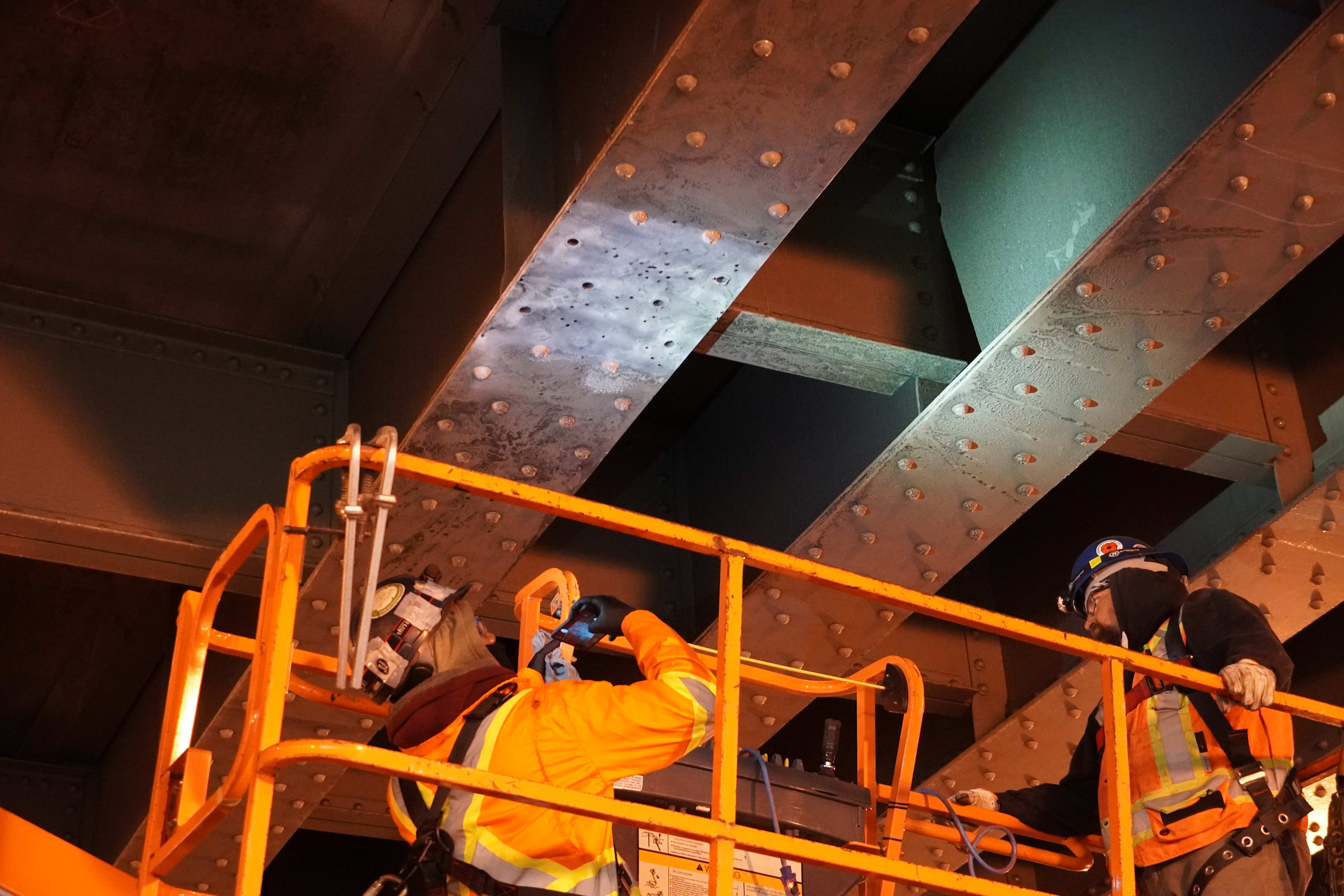
Engineers choose the weakest bolt in each bridge to get the most accurate indicator of its overall condition. (Metrolinx image)
Ground improvements
To bring faster, more frequent service as part of GO Expansion, we’re combining the Don and Wilson yards – located west of the Don River and Don Valley Parkway and north of Lake Shore Boulevard East – into a single active rail yard.
To do this, crews have been leveling the ground using recycled concrete from nearby construction projects like the Gardiner Expressway and Rogers Centre. But it’s more than just moving rubble. For months, the material was sorted using a giant magnet to remove any metal, then crushed to the right size for reuse.
This process, called surcharging, stabilizes the ground and using recycled concrete helps divert waste from landfills. Crews have also been conducting drainage work, utility relocation, retaining wall installation and access road construction.

Other work underway at Wilson Yard includes drainage and utility relocations. (Metrolinx image)
Looking ahead
Once upgrades are complete, Union Station will be able to accommodate up to 80 trains per hour – four times the levels of today. This is part of how we’re expanding GO to better serve the thousands of passengers who move through Union Station each day and provide faster, safer and more accessible transit.
For more information on the Union Station Enhancement Project, please visit metrolinx.com/ and follow @GOExpansion on X and Instagram.