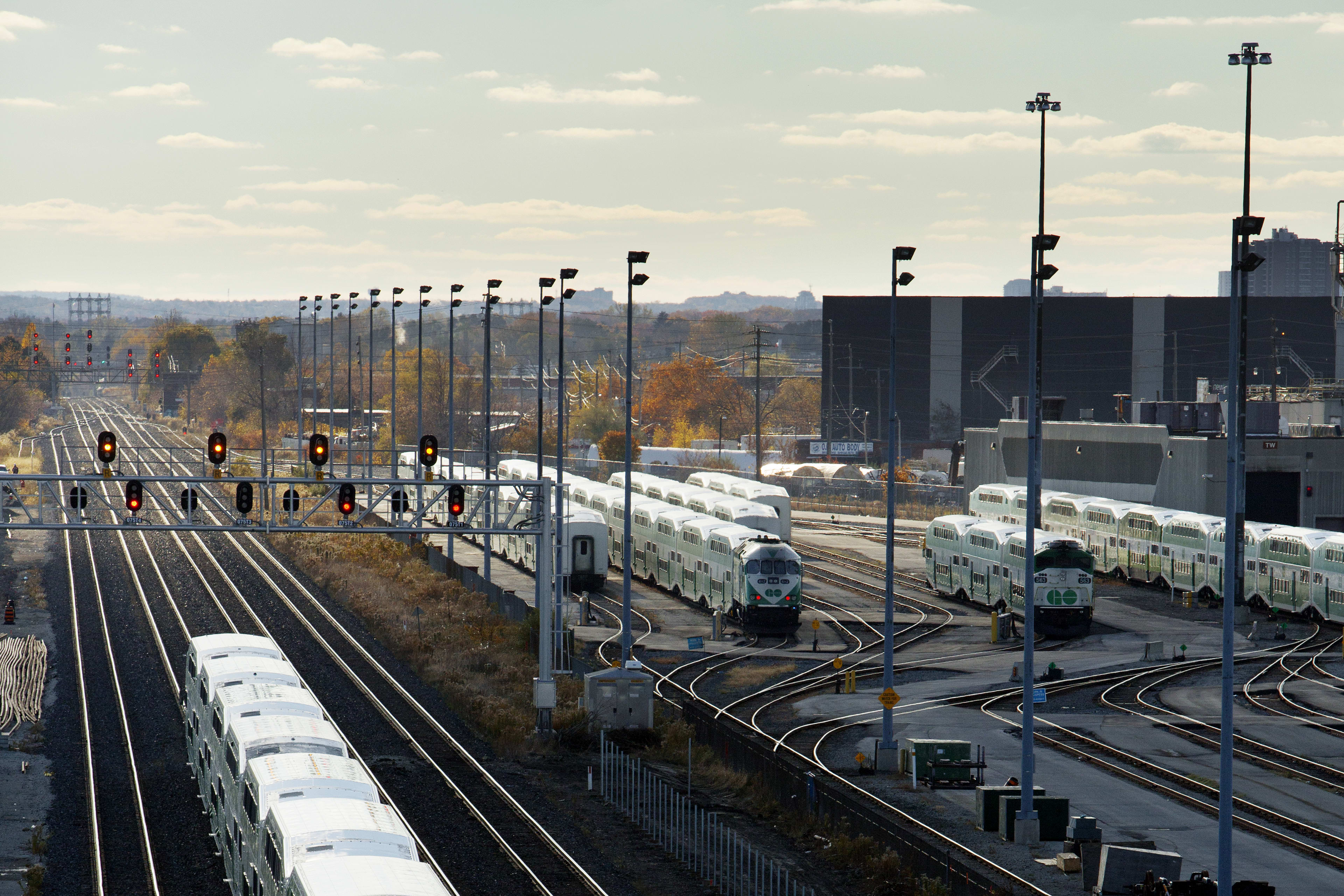
Keeping safe around rail crossings
Key safety reminders for drivers, cyclists, and pedestrians near railway tracks.Did you know that it can take up to two kilometres for a train to fully stop after pulling the emergency brake? That's the length of 33 hockey rinks.
With more trains, more service, and more people moving across our region every day, staying aware at rail crossings is essential. For drivers, pedestrians and cyclists, paying attention to your surroundings and knowing the signs will help keep you safe.
These important reminders can help keep all of us safe when we are travelling near tracks.
Drivers
When driving, you may encounter rail crossings regularly as you travel throughout the region.
Here are some important safety tips to keep in mind:
• Make sure there is enough room on the other side of the tracks before you cross the tracks. Ensure your whole vehicle can clear the crossing and leave at least 5 metres, or one car length of space on the other side.
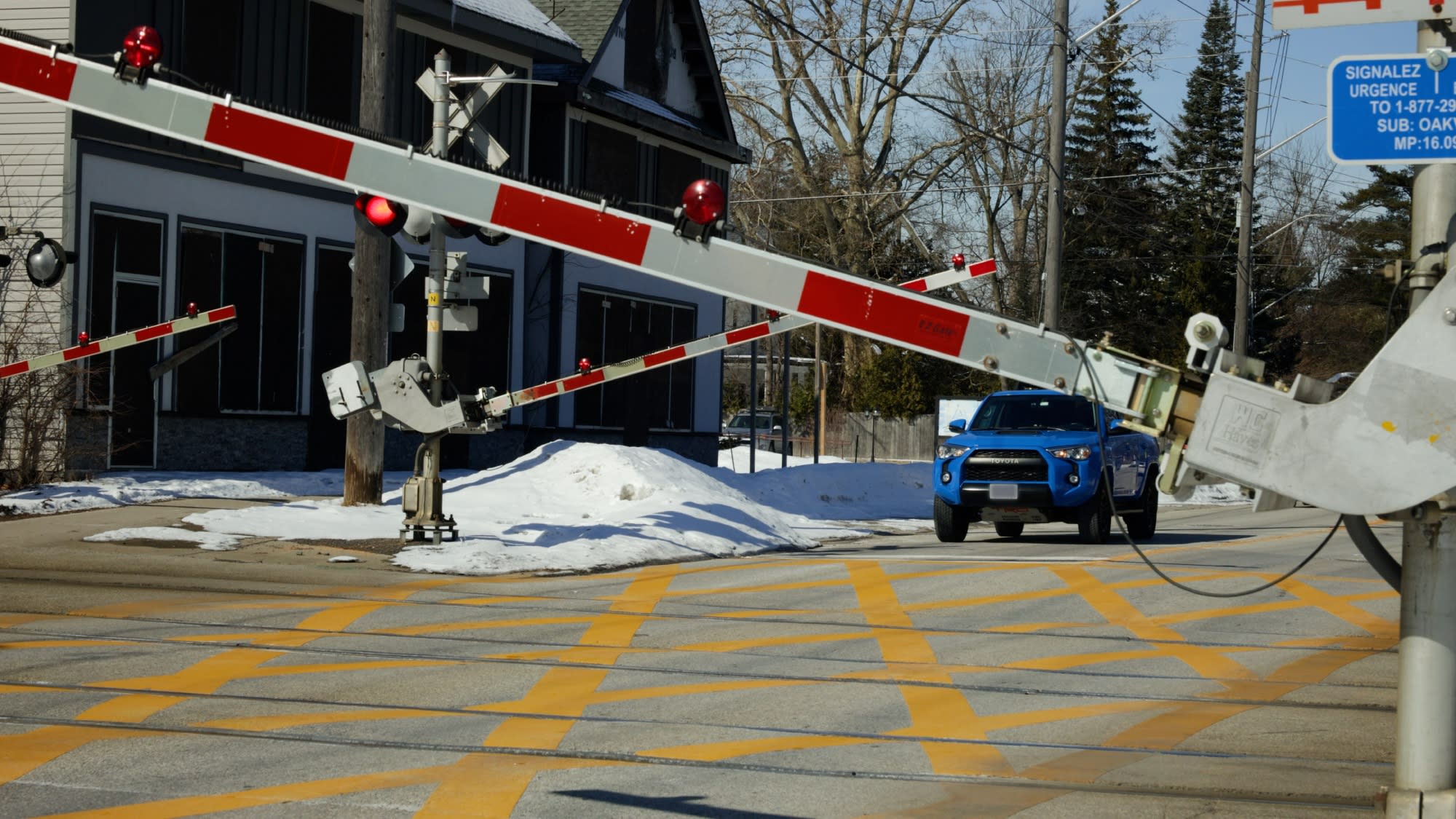
• Flashing red lights, ringing bells, and lowering gates signal that a train is approaching. Slow down as you approach the tracks. Come to a full stop at the railway crossing.
• When the lights activate or the gates begin to lower: stop, wait, and stay back.
• When the gates come up and the lights stop flashing, it is now safe to cross.
• Never try to beat a train. Trains can travel up to 140 km/h and may require up to 2 kilometres to stop.
Did you know that some drivers still try to drive through or around the crossing arms? This is extremely dangerous and it’s illegal. Always make sure you have enough room for your vehicle to get a full car length past the crossing. We have pavement markings at most crossings, but if there’s no lines, stop at least 5 metres from the nearest track. Ignoring the signals puts you, your passengers, railway employees, and other road users at serious risk.
In case of emergency situations, including your car stalling or getting stuck on the tracks, immediately get everyone out of the vehicle and move far away from the rail crossing.
Call the emergency number posted on the blue-and-white Emergency Notification Sign (ENS) to report a vehicle on the tracks.
If you cannot find the blue-and-white sign, call 911. You can also use the emergency number to report any signs or signals that seem broken.
Cyclists
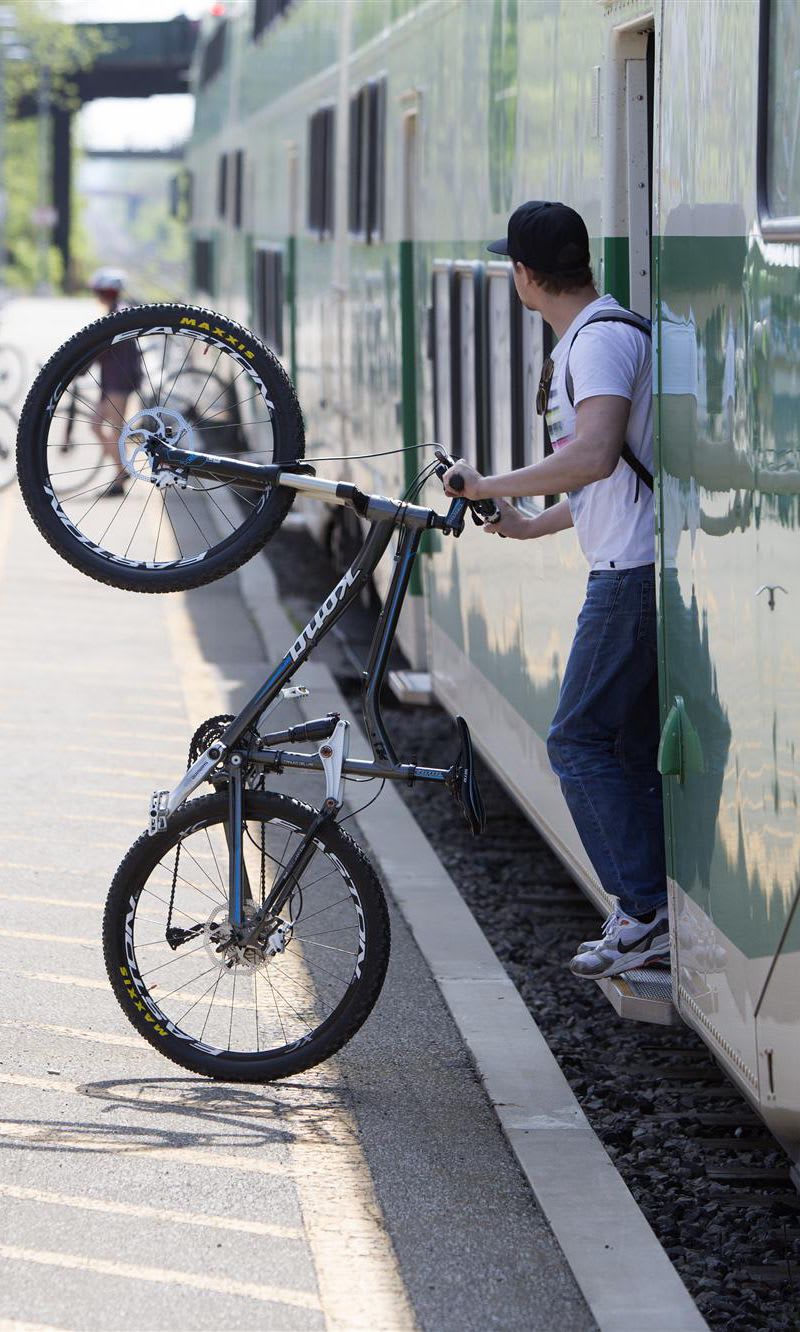
When you are riding your bike near a rail crossing, slow down and pay close attention to the signs, signals and track surface ahead of you.
• Keep these tips in mind when approaching and crossing railway tracks:
• Stay alert as you approach the crossing. Keep headphones out so you can hear trains coming from either direction.
• Slow down as you reach the tracks. If the surface looks uneven or slippery, dismount your bike and walk it across at a right angle so your wheels do not get caught in the rails.
• Watch for flashing red lights, ringing bells, or lowering gates. This means a train is approaching.
• Come to a full stop, keeping 5 metres or one car length from the tracks. Trying to get through before the train is dangerous and illegal.
Stay behind the gates while they are down. Wait until the gates rise and the lights stop flashing before you cross.
Riding along the tracks or using them as a shortcut is dangerous and illegal. Trains can arrive at any time, on any track, and are often quieter than you expect.
Pedestrians
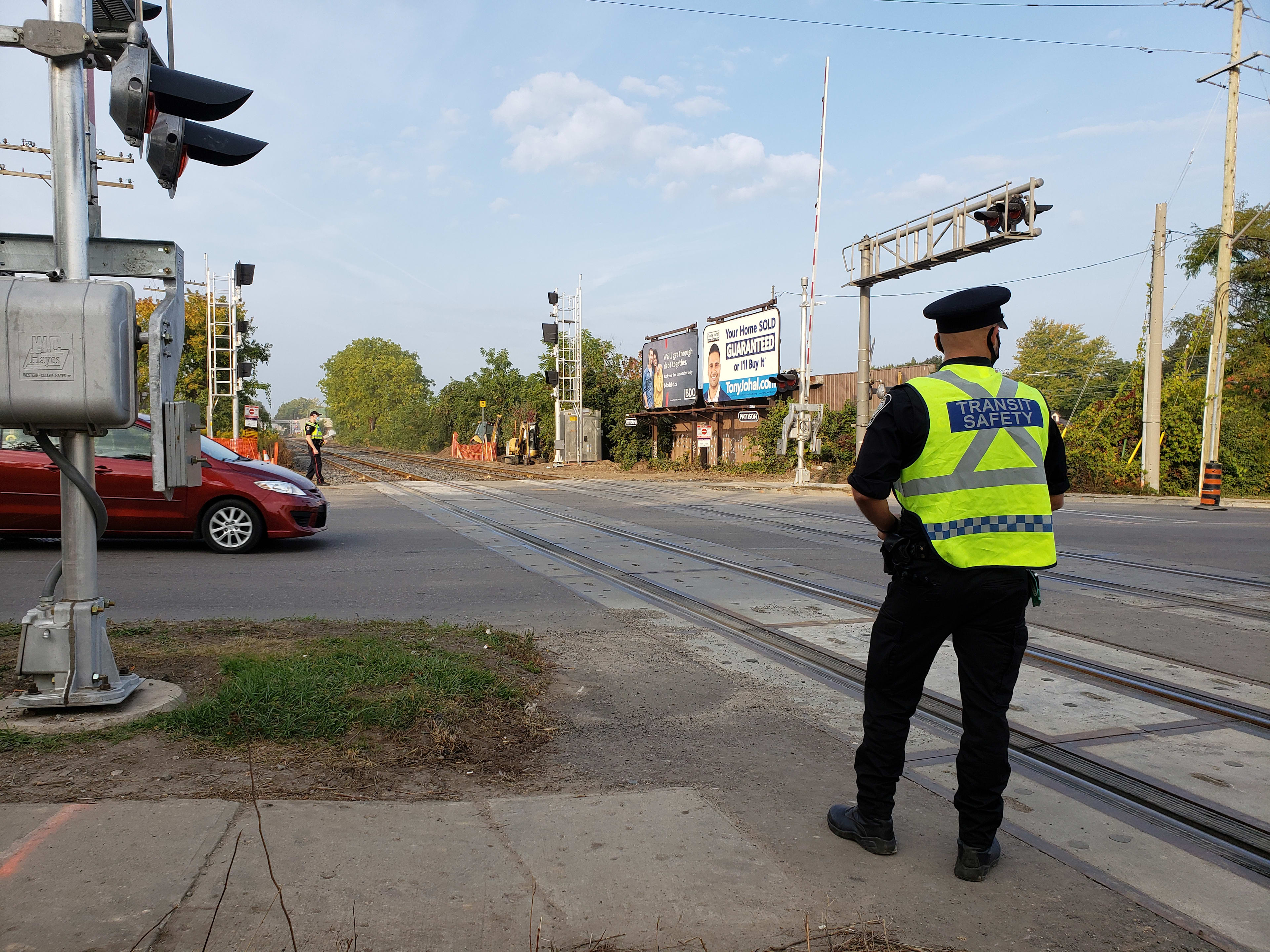
When you are approaching a rail crossing, remove all distractions. That could mean putting down your phone and taking out your headphones, so you can pay full attention to the signs and signals at the crossing.
• Keep these tips in mind when you are at a rail crossing:
• Put away cell phones or headphones
• Stay alert and listen for signs that a train may be approaching
• Flashing red lights, ringing bells, and lowering gates mean a train is approaching
• Never try to run across the tracks ahead of a train — it is extremely dangerous and illegal
Wait until the gates come up and the lights stop flashing. Only then is it safe to cross
Climbing or cutting through fences to use tracks as shortcuts is trespassing – both illegal and extremely dangerous.
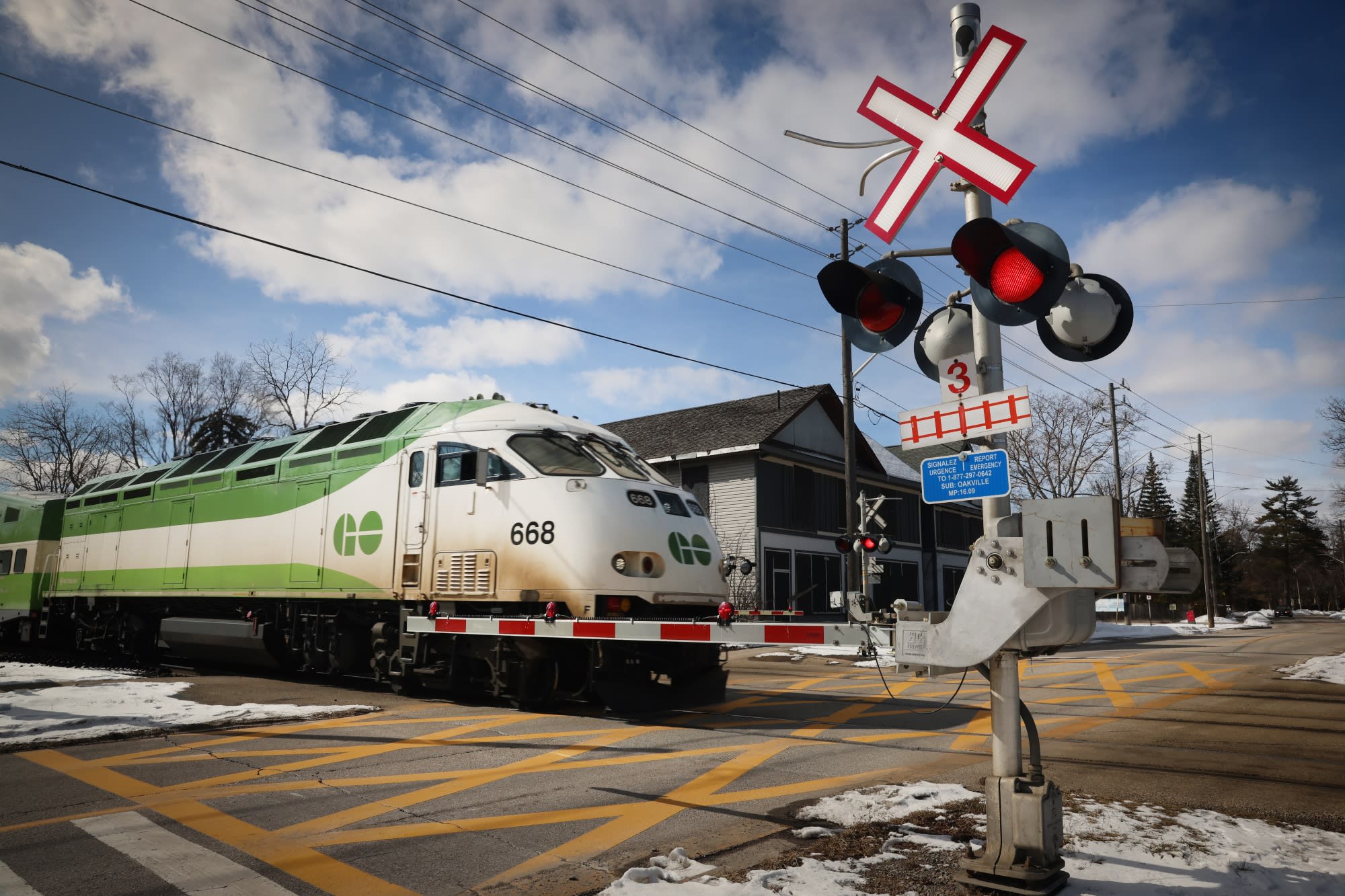
A reminder for everyone
Always stay at least one car length or 5 metres from the nearest tracks. GO trains often share tracks with freight trains, which can overhang the rails by as much as 1 metre on either side. Some may carry loads wider than the railcars themselves, and loose equipment such as straps can swing outward, posing additional danger.
Even if you don’t see a train coming, assume one is approaching. Trains can be quieter and faster than they appear. Some crossings have multiple tracks - trains can come at any time, from either direction, and on any track.
An optical illusion can also make trains appear farther away or slower than they truly are. For context: an average freight train weighs over 5.5 million kg, while a typical car weighs about 1,375 kg. A collision between a train and a car is like a car rolling over a pop can.
Looking ahead
Metrolinx is working across the region to improve safety at key points where GO train tracks intersect with pedestrians, cyclists, and drivers. This work will take place over several years and in multiple phases. In some high‑traffic areas, Metrolinx is even building bridges to separate cars and pedestrians from rail traffic.
As our region expands and more people rely on our rail network, simple actions — slowing down, paying attention, and respecting rail signals — can save lives. Together, we can ensure safer journeys for our riders and every community we serve.