Share
Preserving rail history during construction at East Harbour
A rare railway artifact links East Harbour’s future to nearly a century of Toronto rail history.
Feb 20, 2026
Construction of the future East Harbour Transit Hub will bring GO Transit and TTC services together in one location, creating new and more convenient transit connections for Toronto’s east end and across the region.
As crews build the infrastructure needed at the hub to support expanded GO service and the Ontario Line subway, the work has also revealed an important chapter of the city’s rail history.
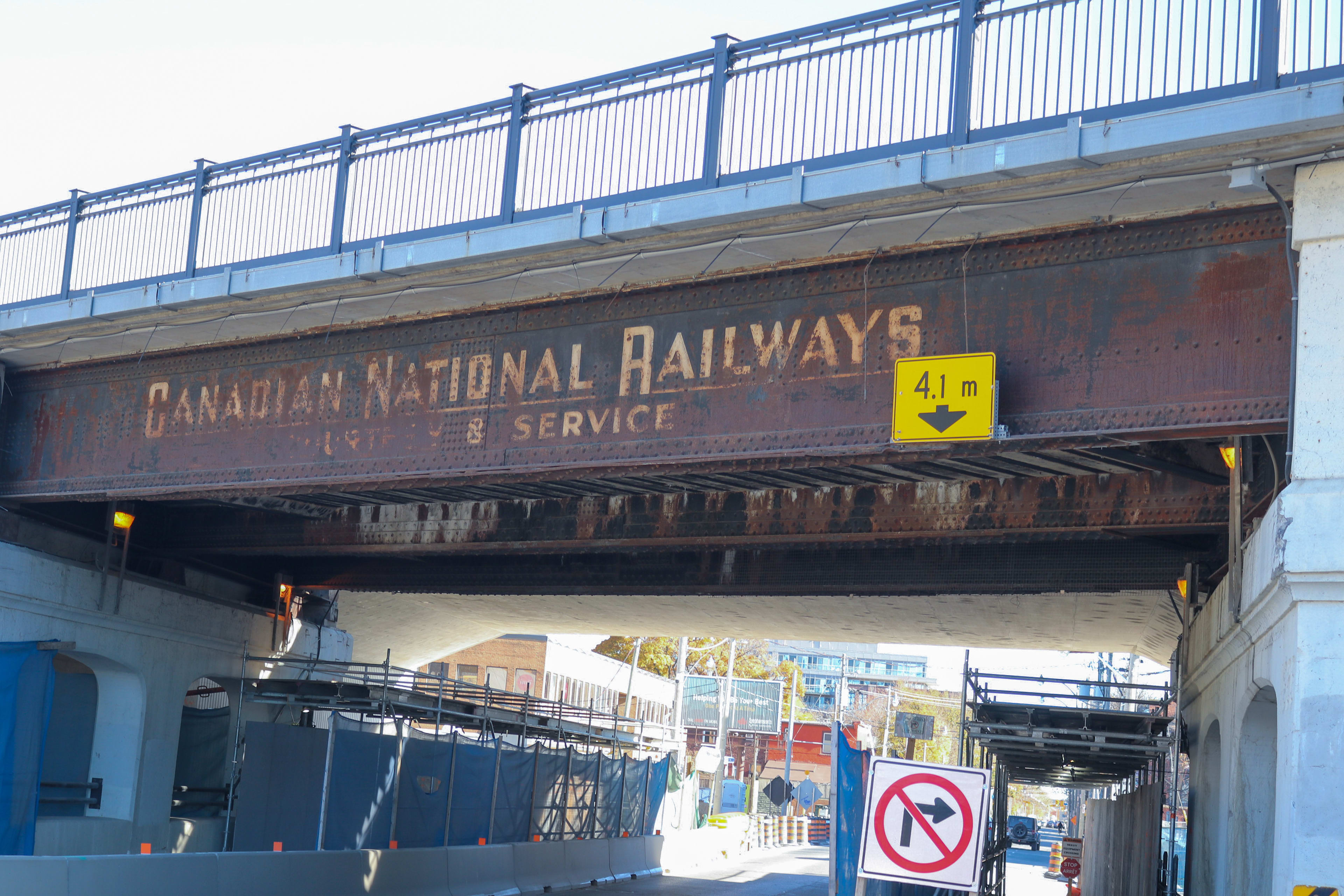
During the demolition of the west side of the rail bridge over Eastern Avenue, a century-old Canadian National Railways steel girder was recovered. This find offers a rare, tangible connection to the railway that shaped the area decades before East Harbour was imagined.
A history rooted in safety and city building
The Eastern Avenue bridge was constructed following the 1924 Toronto Grade Separation Agreement, a landmark collaboration between Canadian National Railways (CN), Canadian Pacific (CP), the City of Toronto and the Toronto Harbour Commission.
At the time, rail lines ran at street level through much of downtown, creating dangerous conditions for vehicles and pedestrians. Hundreds of injuries and fatalities had been recorded at these at-grade crossings, prompting calls for change from the surrounding communities.
To improve public safety while relieving congestion, the agreement set out a plan to elevate railway tracks above city streets across the downtown waterfront. The result was the construction of a series of rail bridges in Toronto’s east end, including the Eastern Avenue bridge, which was originally completed in 1926.

The Eastern Avenue bridge under construction in June 1926. (City of Toronto Archives)
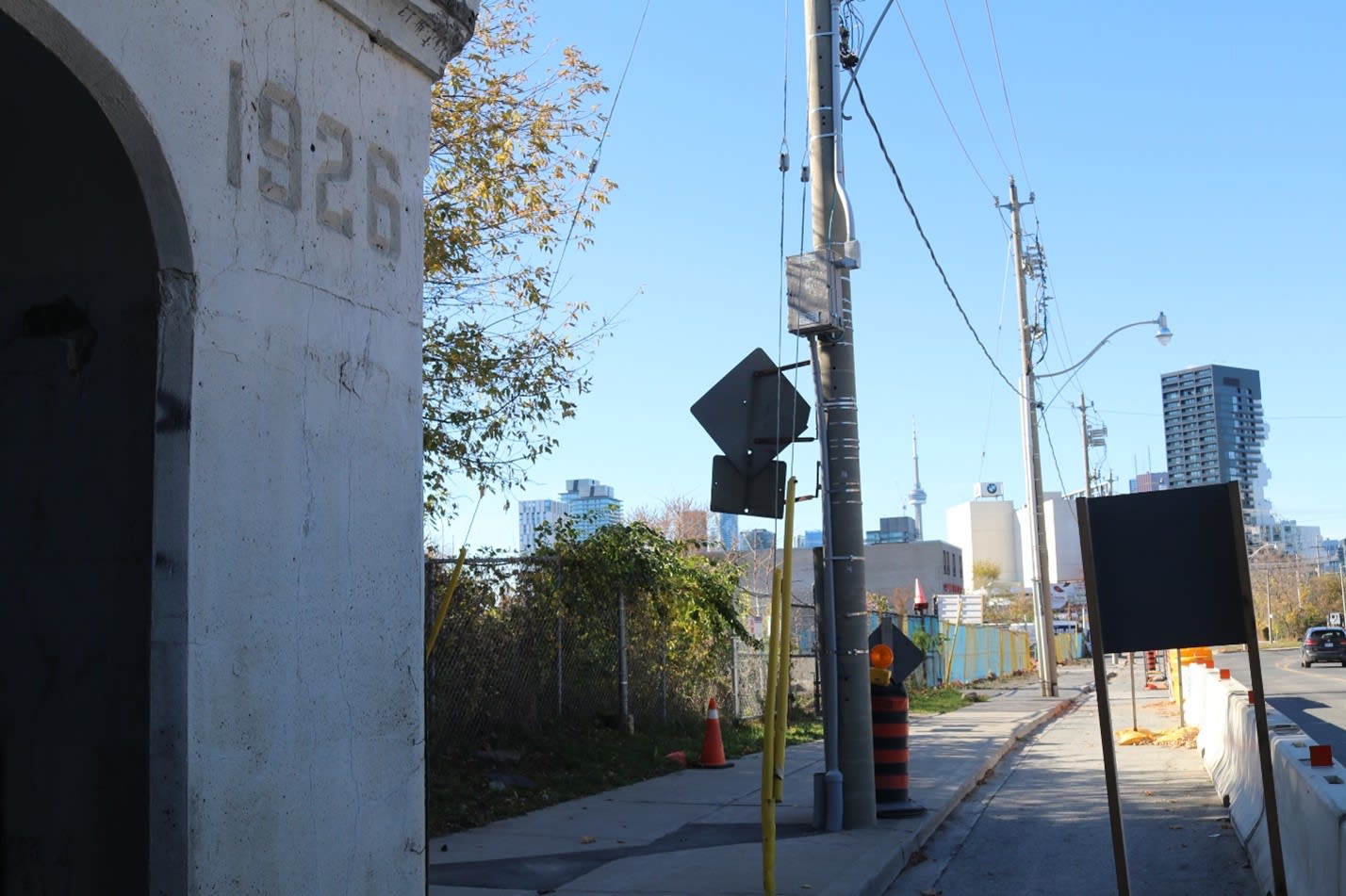
One of the abutments of the Eastern Avenue bridge, photographed in 2024. (Metrolinx image)
Uncovering the past while a new bridge is built
Reconstruction of the Eastern Avenue bridge began in 2023 to support the future East Harbour Transit Hub. The bridge is being widened and rebuilt in phases so GO train service can continue while work progresses. Once complete, it will support six tracks — four for GO Transit and two for the future Ontario Line subway.
During the second phase of the bridge demolition in January 2025, crews carefully extracted a CN steel girder that was part of the original structure. The girder was a large horizontal beam that supported the deck of the bridge, carrying the weight of the tracks and trains running on it.

Crews with the East Harbour Transit Hub use a crane to remove the CN ‘Courtesy and Service’ girder. (Metrolinx image)
This girder was part of a collection of what were known as CN’s “billboard bridges.” Faded lettering on the girder reads “Courtesy and Service,” a well-known CN slogan from the mid-20th century that reinforced the company’s commitment to customer service.
According to the Canadian National Railways Historic Association, these “billboard bridges” were some of its earliest branding efforts. The slogan was applied to highly visible infrastructure, acting as an advertisement during a period when the company shifted its focus from freight to passenger service.
Preserving rail history
After crews removed the CN girder from the Eastern Avenue bridge, they kept it intact on site, protecting it from the elements throughout the past year.

Crews with the protected girder at the Eastern Harbour Transit Hub construction site. (Metrolinx image)
During this time, Metrolinx, the City of Toronto and the East Harbour Transit Hub Alliance worked to secure a location for storing the girder. This collaborative effort has led to the girder being transferred to the City of Toronto to store.
Currently, the City plans to incorporate the girder as part of Section 5 of the Gardiner Expressway Strategic Rehabilitation Plan, which includes the realignment and reconstruction of the elevated expressway and the realignment and redesign of Lake Shore Boulevard East, between Cherry Street and the Don Valley Parkway.
Through this work, the City will explore opportunities to permanently integrate the girder into the public realm as a placemaking and cultural heritage element, either along the public boulevard and/or multi-use trails. This approach would enhance the public realm, and ensure the girder remains visible and accessible to the community.
Looking ahead to the next century of rail
While construction methods, scale and purpose have evolved over the last 100 years, some goals remain the same.
Just as the 1924 Toronto Grade Separation Agreement once improved safety and gridlock, the East Harbour Transit Hub will deliver more transit options, reduce commute times and ease congestion across the network.
Once complete, customers could see trains arriving at the East Harbour Transit Hub as frequently as every five minutes during the busiest travel hours. Combined with Ontario Line users, the station is expected to serve about 100,000 daily riders. This will help reduce crowding at Union Station by as much as 14 per cent — or 14,000 people — during rush hour.
Preserving the rare CN steel girder ensures the area’s history remains a part of Toronto’s transit story, ahead of the East Harbour Transit Hub ushering in the next chapter (and century) of rail travel.
For more information on the East Harbour Transit Hub, please visit the project page, sign up for our newsletter and follow @GOExpansion on X and Instagram.