Share
What’s in the GO bus fleet
Get to know the buses that get you across the expansive GO bus network!
Dec 3, 2025
Did you know the GO bus network is so vast, some routes are more than 100 kilometres long? From Oshawa to Oakville, Kitchener to Vaughan and many more routes in between, there are over 1,000 stops that our GO buses make on a regular basis.
Much like our rail vehicles, the GO bus fleet is made up of buses that each serve a specific purpose.
GO buses by the numbers
There are two primary varieties of GO bus: the single level coach and the double decker.
“When deciding on which type of bus to use (coach or double-decker) on a given route, the two main factors that may be considered are seating capacity and bus height,” said Bornik Adhikary, an Engineering Assurance Analyst working with the GO bus fleet.
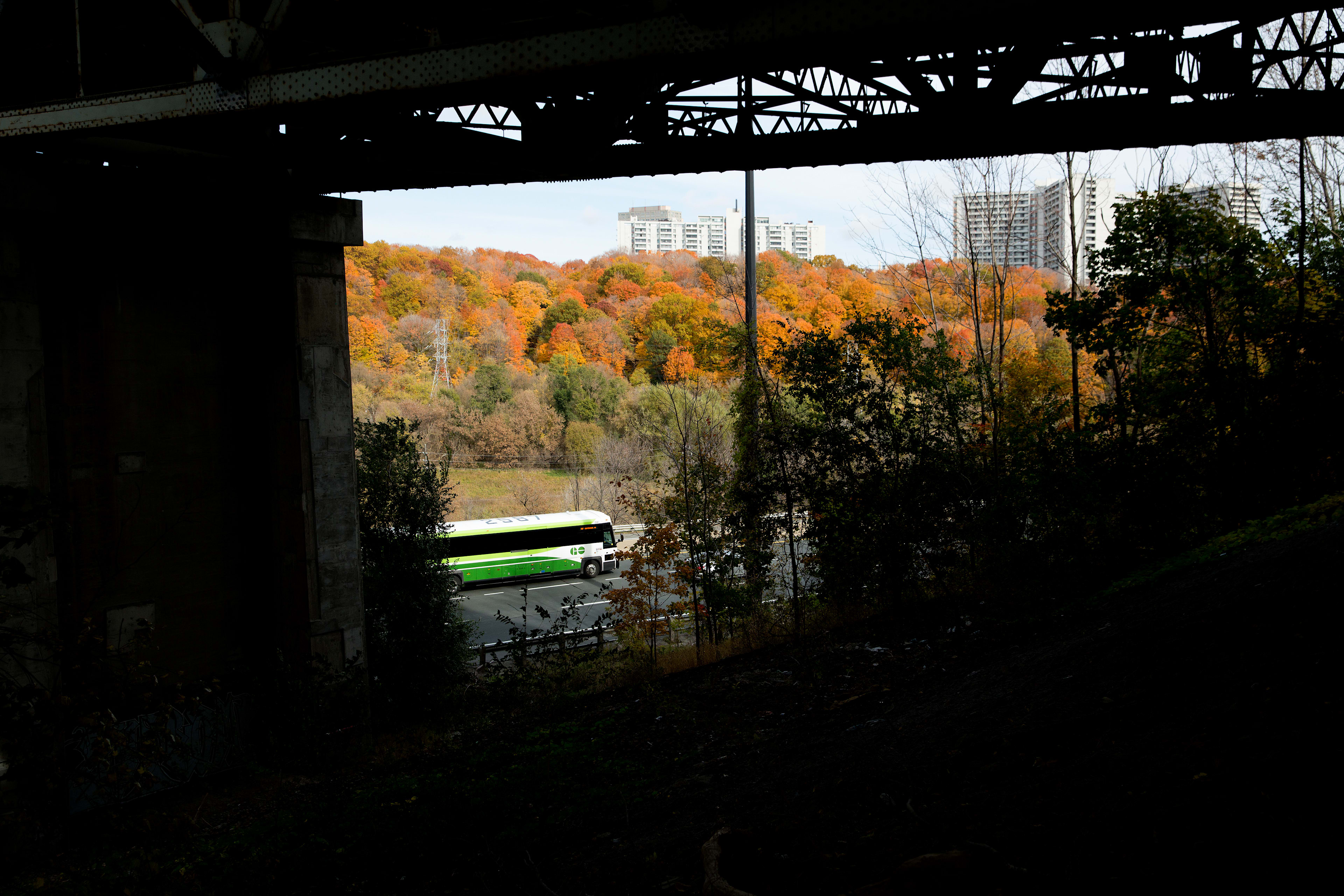
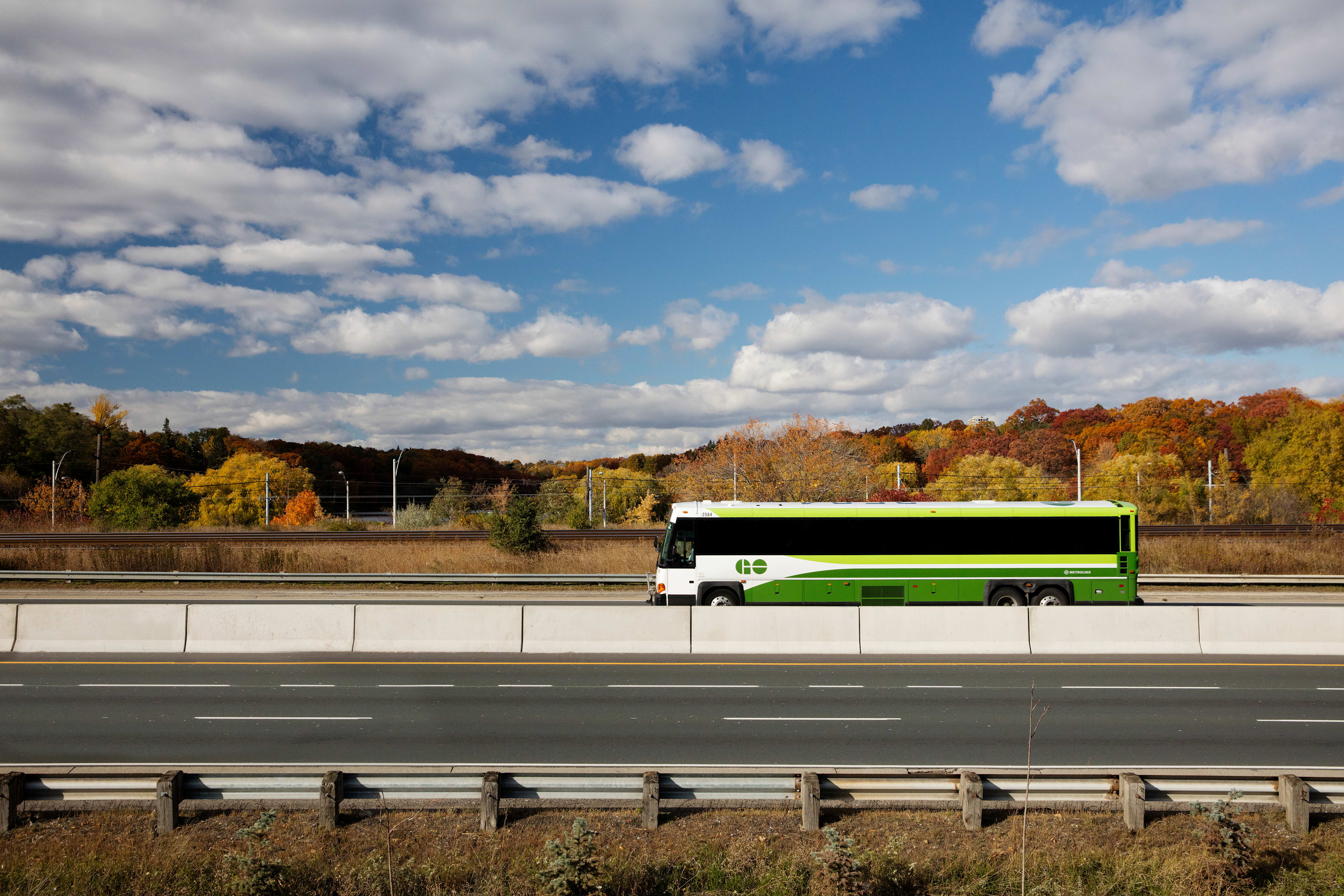
GO bus number 2587 traveling along its route. (Metrolinx photo)
“Some routes experience heavy passenger traffic, making double-decker buses ideal because they provide more seating. However, certain routes have low underpasses that double-deckers can’t clear. In those cases, a standard coach bus would be the better option.” Adhikary said.
Currently, there are 443 active GO buses in service, so let’s meet the fleet!
The single level: MCI D4500
Motor Coach Industries (MCI) is the manufacturer behind our single level coaches, the D4500 bus.
Each one can transport up to 55 passengers up to a maximum range of 1,100 km.
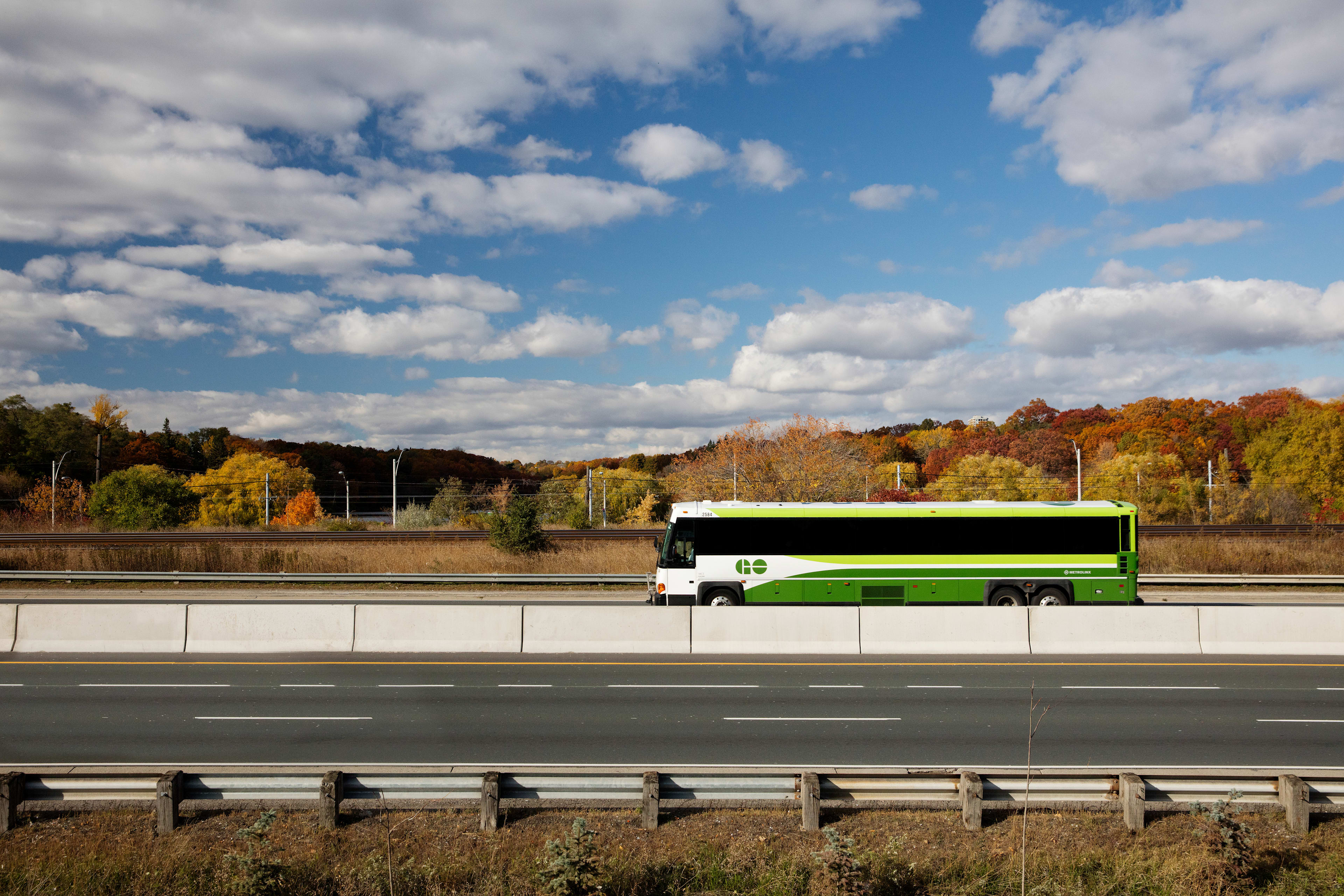
Bus number 2584 transporting customers on an autumn day. (Metrolinx photo)
Our D4500’s are all wheelchair accessible and feature a bike rack on their front.
Each single level bus can be identified by its 2000-series numbering. Currently, there are 173 single level buses in service, with numbers ranging from 2432 to 2616.
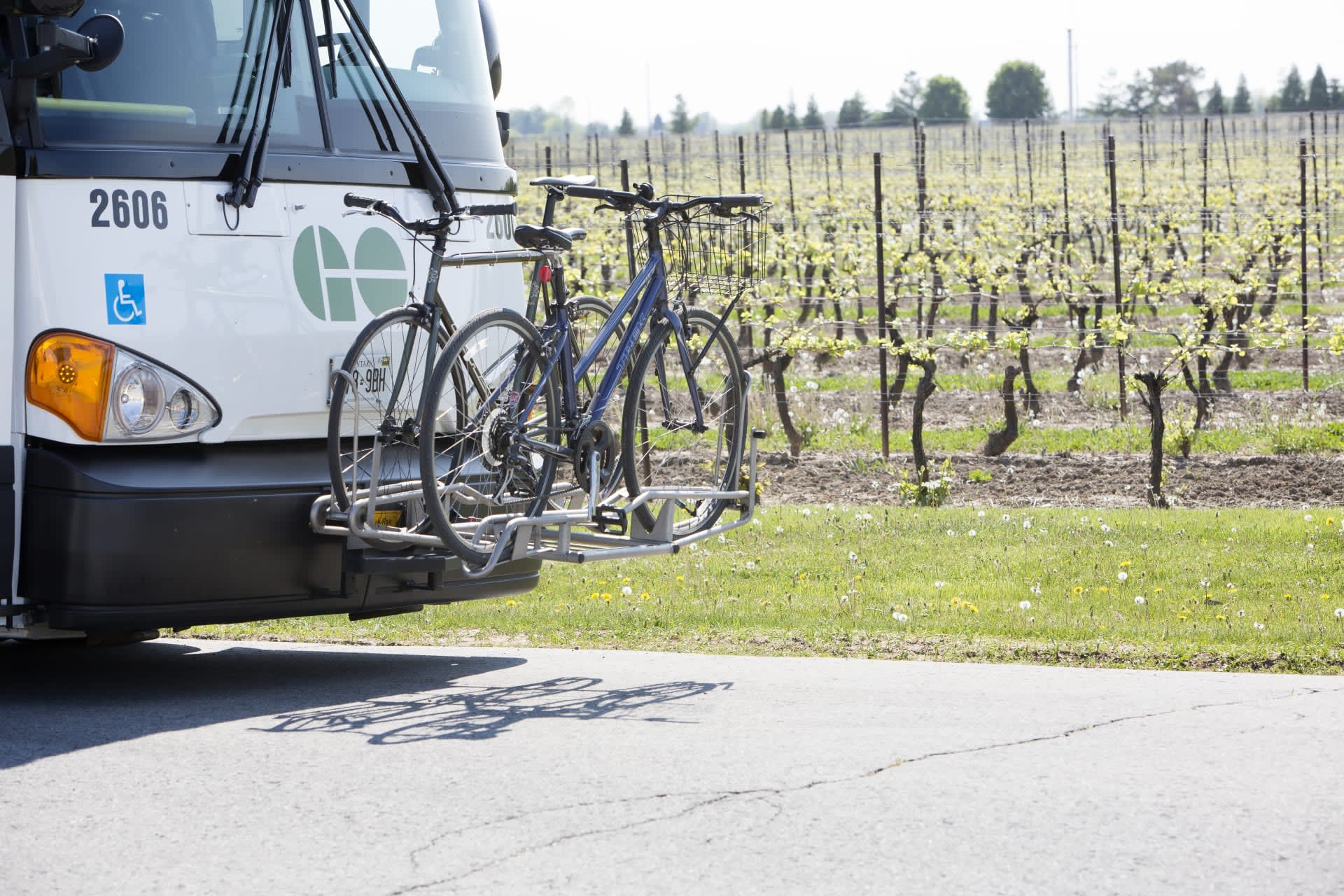
MCI D4500 number 2606 showing its bike rack in action. (Metrolinx photo)
Our D4500’s stand 3,549 mm tall, 2,591 mm wide (with doors closed) and 13.8 metres long.
Double decker: ADL Enviro 500
As our friend Bornik said, some routes can be particularly busy and require a higher seating capacity. That’s where our double decker buses come in handy. Built by Alexander Dennis Limited (ADL), these two-level coaches can transport 81 passengers up to 900 kilometres.
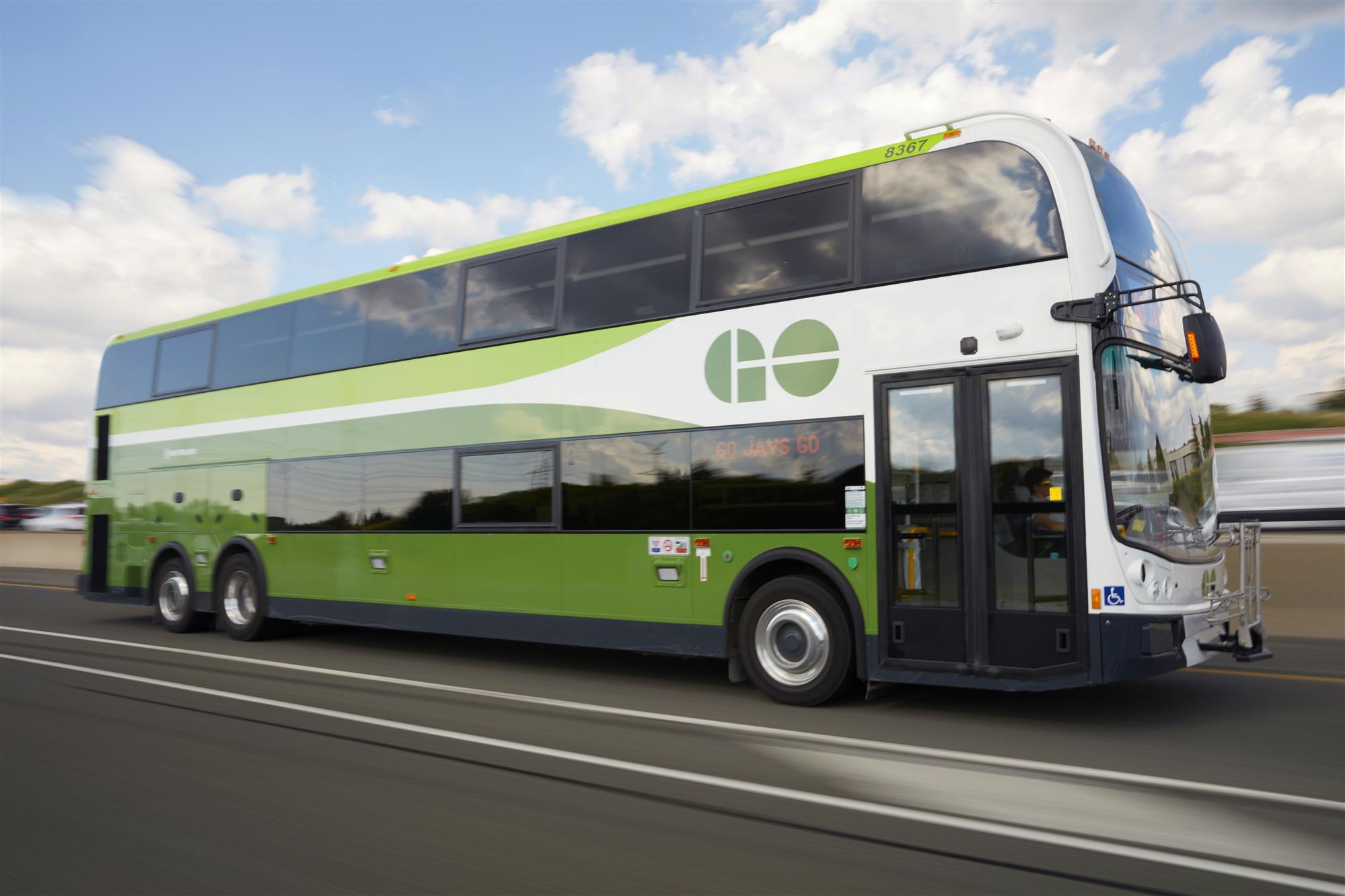
ADL bus number 8367 celebrates the Toronto Blue Jays along its route. (Metrolinx photo)
At 3,910 mm tall, the double decker bus stands over 360 mm above its single level counterpart. While is a little more trim at a width of 2,520 mm, it too is 13.8 metres long.
Like the MCI D4500, our ADL Enviro 500’s are wheelchair accessible and feature a front-mounted bike rack.
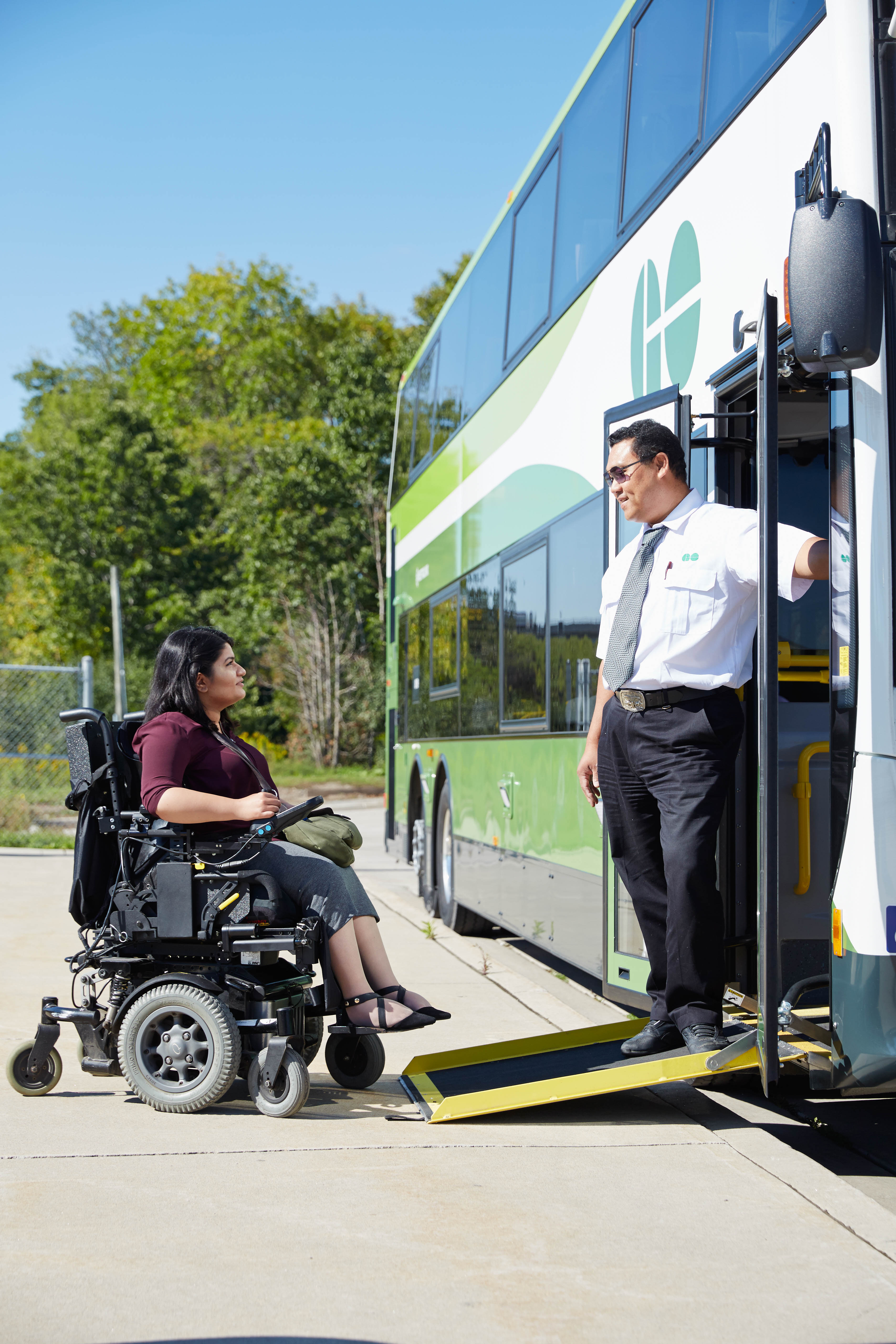
The ADL Enviro 500's ramp in use. (Metrolinx photo)
Double deckers are all in the 8000-series, with active buses numbering from 8300 to 8567.
The next generation
The future is just around the corner! The next generation of single-level coach comes in the form of the Winnipeg-built MCI D45 CRT, where efficiency, reliability, comfort, convenience and technology all intersect.
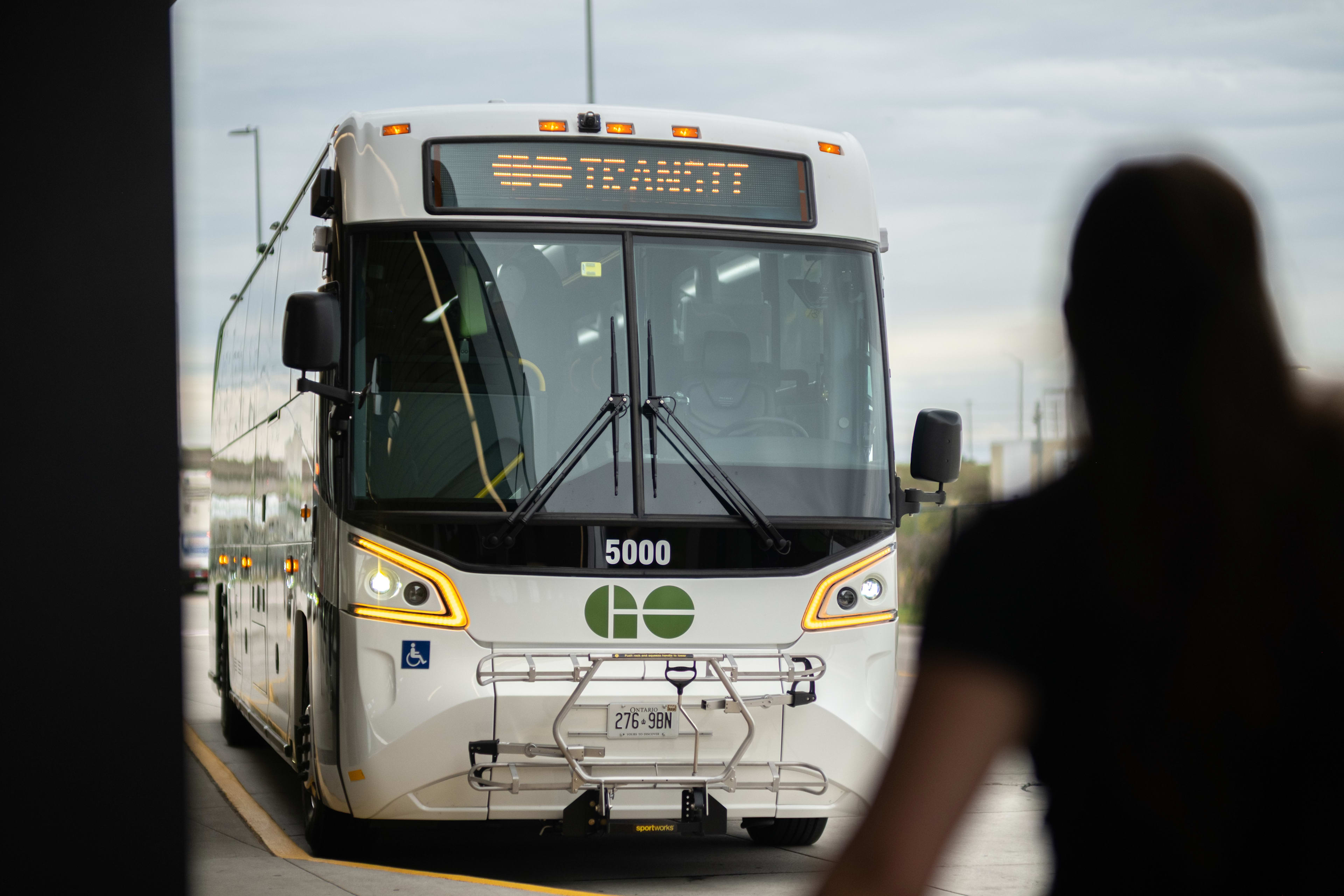
The D45 is the latest generation of GO bus, built at MCI’s Winnipeg plant. (Metrolinx photo)
The MCI D45 features a low-emission Cummins X12 diesel engine, LED lighting and an advanced suspension system, supporting cleaner, greener and safer travel across the region.
Reclining, ergonomic seats with folding armrests and footrests ensure a comfortable journey, with dual USB ports (Type A and Type C) at every seat for added convenience.
Passengers can also enjoy the convenience of overhead parcel racks, large baggage bays and a locking luggage compartment. As well, a heated stepwell for safe movement in winter and an auxiliary A/C system for even airflow and temperature.
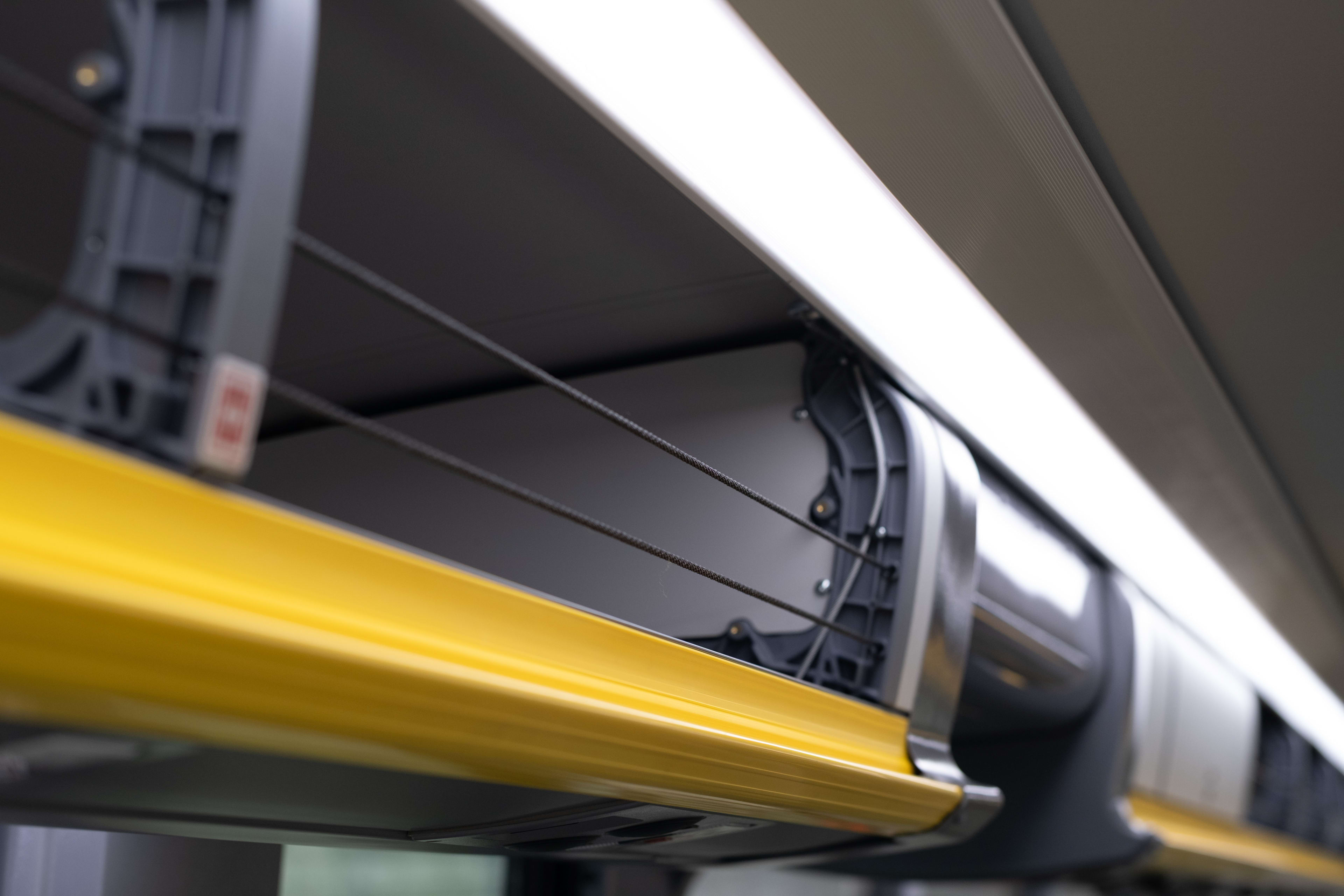
Overhead storage adds convenience to your GO bus journey. (Metrolinx photo)
The bus is also accessible with a specialized lift, sliding door and restraints for wheelchair users, as well as highly visible yellow safety markings.
For the driver, the bus features a smart infotainment system to display route and stop information to passengers, a 360-degree camera, audio and video pedestrian alert systems, rollover protection and more to ensure a safe journey for everyone.

The MCI D45 GO bus outside of Bramalea GO Station. (Metrolinx photo)
Rear-view mirror
This year, the GO bus service turns 55! Introduced back in 1970, it has gone through no shortage of changes, milestones, growth and more. Check out this fun look back at the evolution of the GO bus!
by Shane Kalicharan Metrolinx Editorial Content Producer