
Ontario Line
A new 15.6-km subway line in Toronto that will run from Exhibition Place, through downtown, all the way to Line 5 Eglinton at Don Mills Road.- Projects & Programs
- Ontario Line
- Resources
- Lakeshore East Joint Corridor
Lakeshore East Joint Corridor
In the east segment, Ontario Line trains will run along dedicated tracks in the existing rail corridor Metrolinx already owns, alongside GO and VIA trains. The upgrades Metrolinx is making to the corridor will keep neighbourhoods quiet while increasing the amount of green space communities can enjoy.
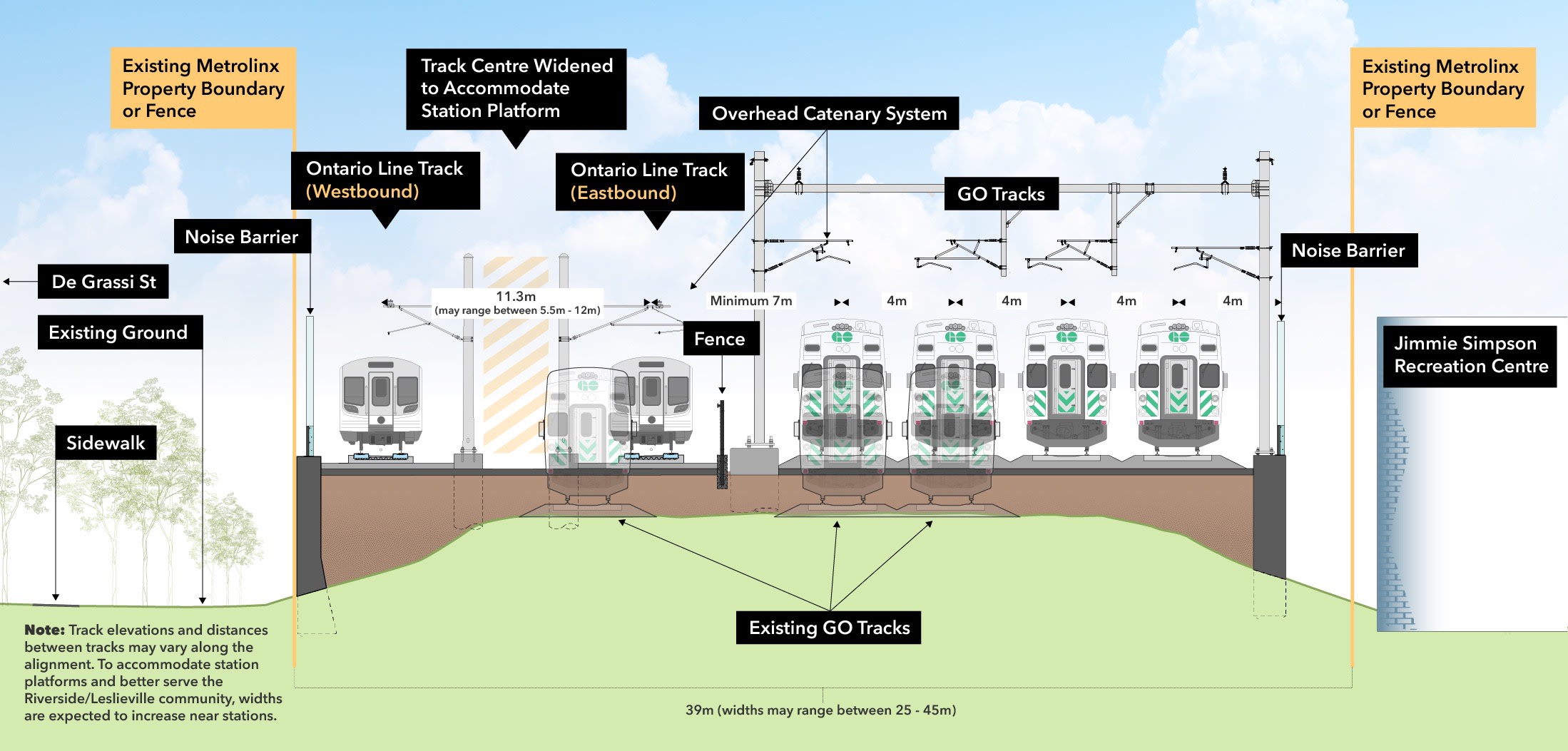
Cross section north of Queen Street at the north end of Jimmie Simpson Recreation Centre.
Protecting and increasing green space
By keeping our work mostly within the existing rail corridor, we’re also able to provide additional green space to the community following construction.
Once the Ontario Line is complete, each of the four park spaces in the area – Jimmie Simpson Park, Bruce Mackey Park, McCleary Playground and the Gerrard-Carlaw Parkette – will be larger. In total, there will be nearly 3,000 square metres of added green space lining these parks.
McCleary Playground will be approximately 400 square metres bigger because we are able to build retaining walls within Metrolinx land, closer to the tracks than the current fence. Jimmie Simpson Park will also benefit from this same treatment, with approximately 700 square metres of new green space added.
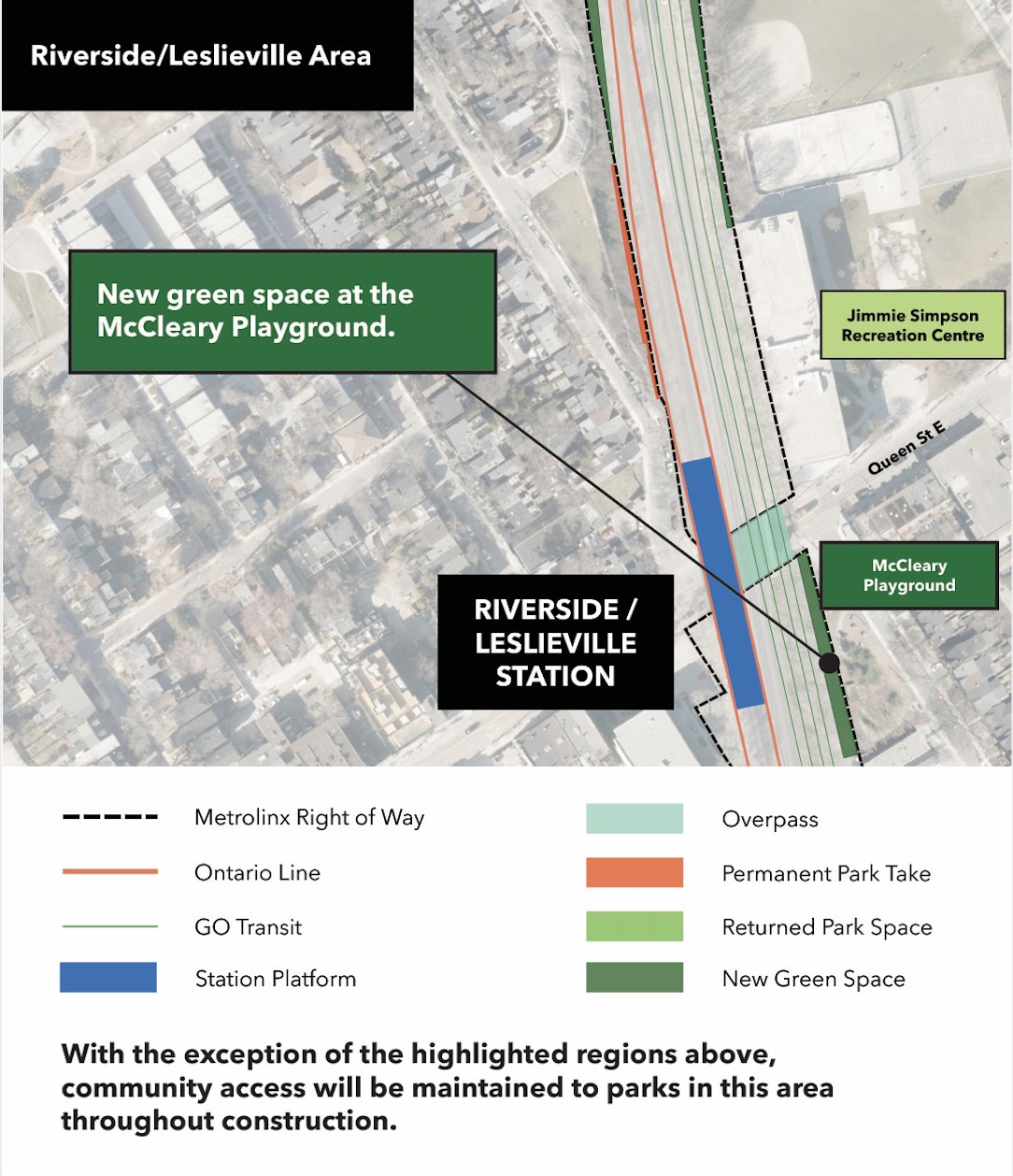
Graphic showing permanent park take and new park space at McCleary Playground and Jimmie Simpson Park.
In Bruce Mackey Park, a small sliver of land extending about two metres beyond the rail corridor at the south end of the park is needed for the new station. This will be more than made up for by the release of additional green space in the northern section of the park, resulting in approximately 1,300 square metres of net new green space.
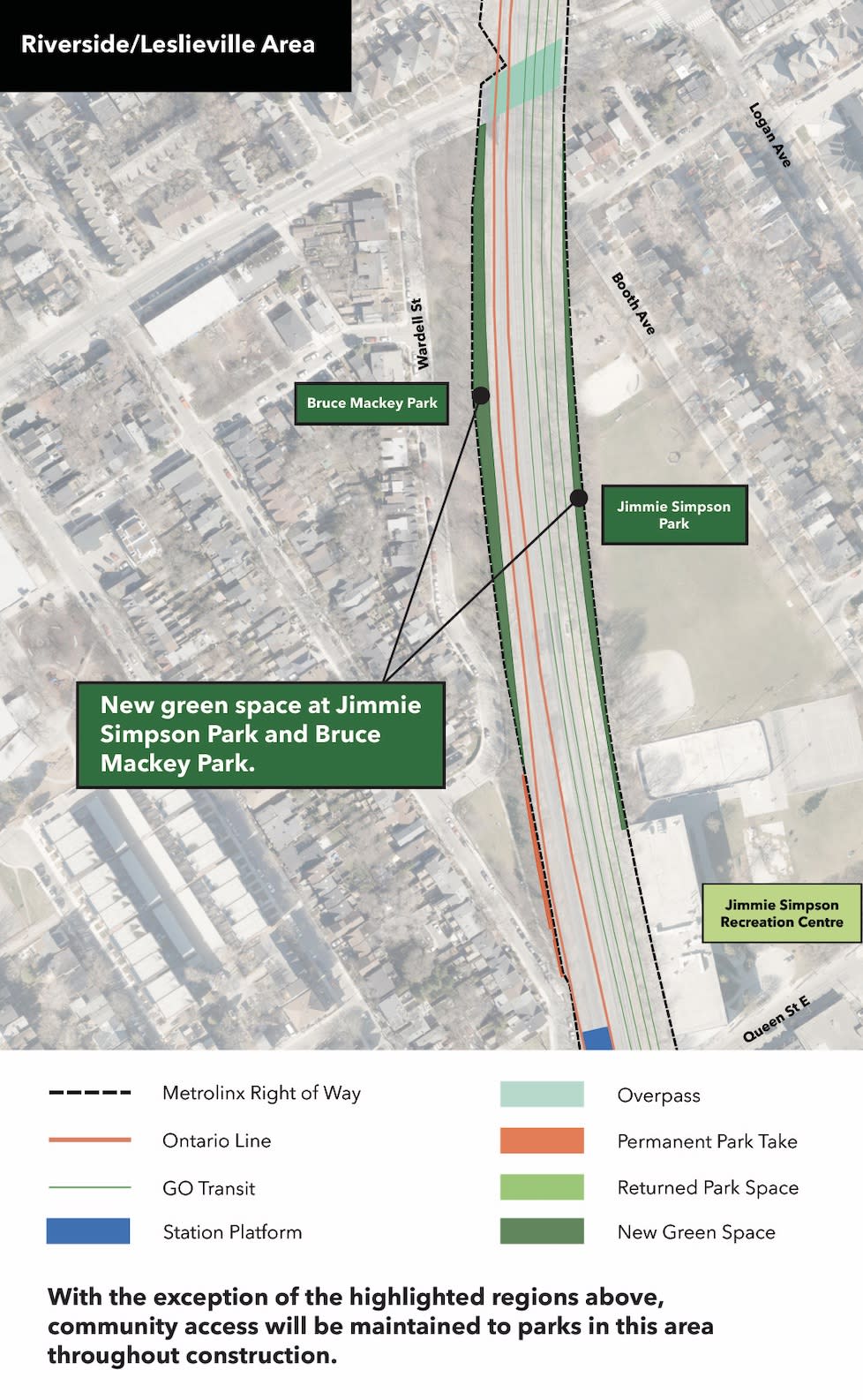
Graphic showing amount of permanent park take and new park space at Jimmie Simpson and Bruce Mackey parks.
A property next to the Gerrard-Carlaw Parkette and dog park is needed to support the construction of a new station at the intersection, but once complete, it will be added to the parkette. Though some space from the existing parkette will be needed to accommodate the new station, there will be approximately 500 square metres of extra space in the reconfigured park when the neighbouring land is factored in.
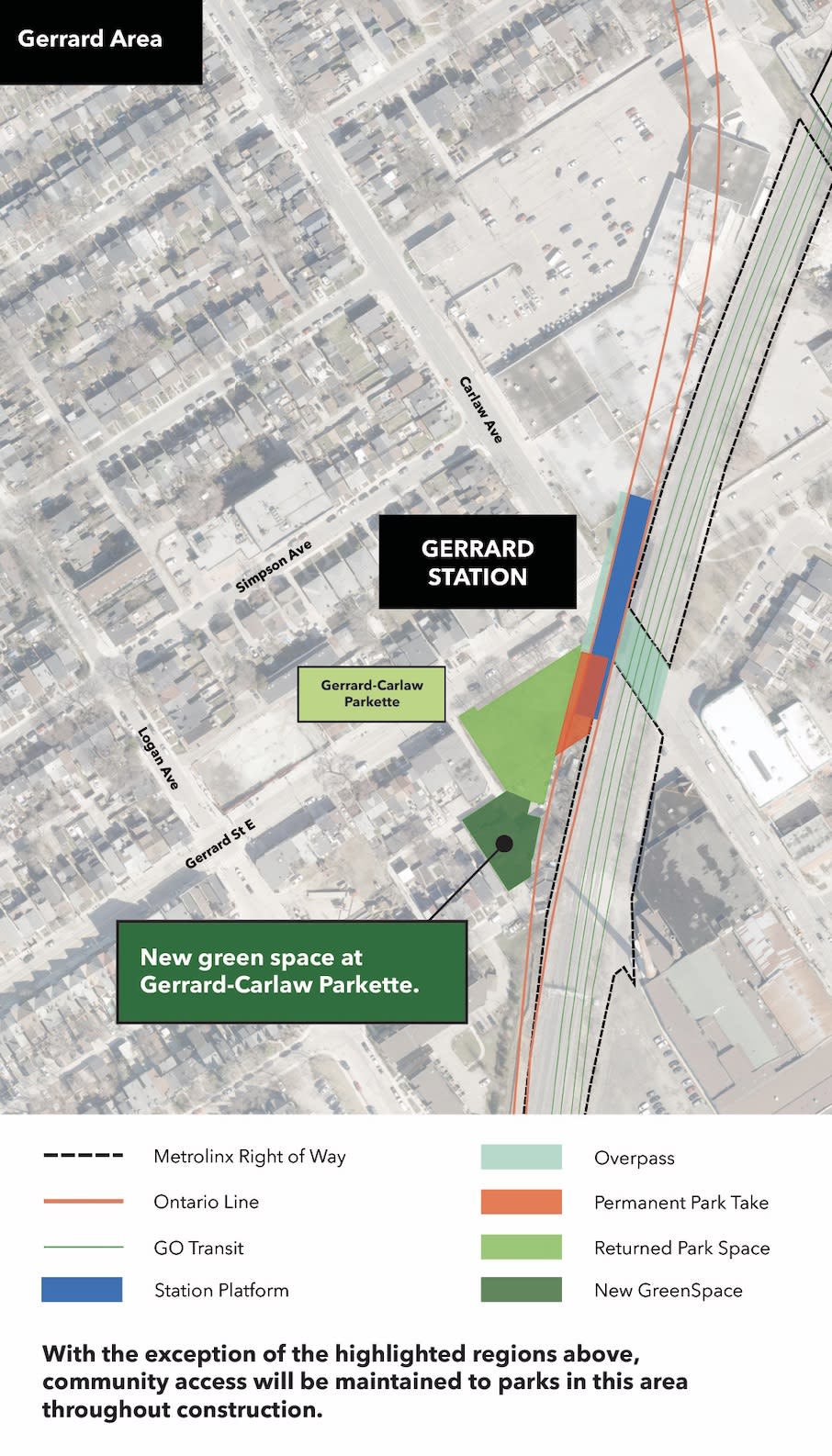
Graphic showing amount of park impacts and new park space at Gerrard-Carlaw Parkette.
Much of the new green space is possible because the new noise and retaining walls fit almost entirely within the existing GO rail corridor and are even closer to the tracks than the previous fence.
Protecting tree cover is also a priority in our planning. While some trees will need to be removed to make room for construction and new infrastructure, we will be doing all we can to maintain or enhance tree cover in the community.
We are working with the city to see how we can help improve park spaces in the area when we’re done with Ontario Line construction. That will include engaging with the community on surrounding landscaping treatments so we can ensure park spaces stay beautiful and green.
Reducing noise and vibration
Transparent noise walls were installed on both sides of the corridor make the sound of every passing train the same or lower than it was before at the majority of locations along the joint corridor through Leslieville and Riverside.
The noise walls are at least five metres high and extend from approximately Eastern Avenue to east of Pape Avenue.

Photo of the transparent noise wall installed along the rail corridor near First Avenue.
Noise walls are just one part of an integrated plan to address noise and vibration for the Ontario Line, including procuring quiet Ontario Line trains that will run on continuously welded rail with no joints.
Metrolinx will also explore a number of proven solutions to address or avoid increases in vibration. These could include rubber mats placed under the track structures and specialized fasteners for the rails.
Designed for the community
Metrolinx is committed to working with the community on the look and feel of new retaining walls and noise barriers to ensure that they fit into the neighbourhood. In partnership with local community members and elected representatives, we have devised community-inspired design enhancements to these structures that will be complemented by robust planting and landscape design plans for the surrounding areas. This will create attractive backdrops for gathering spaces and parks along the rail corridor.
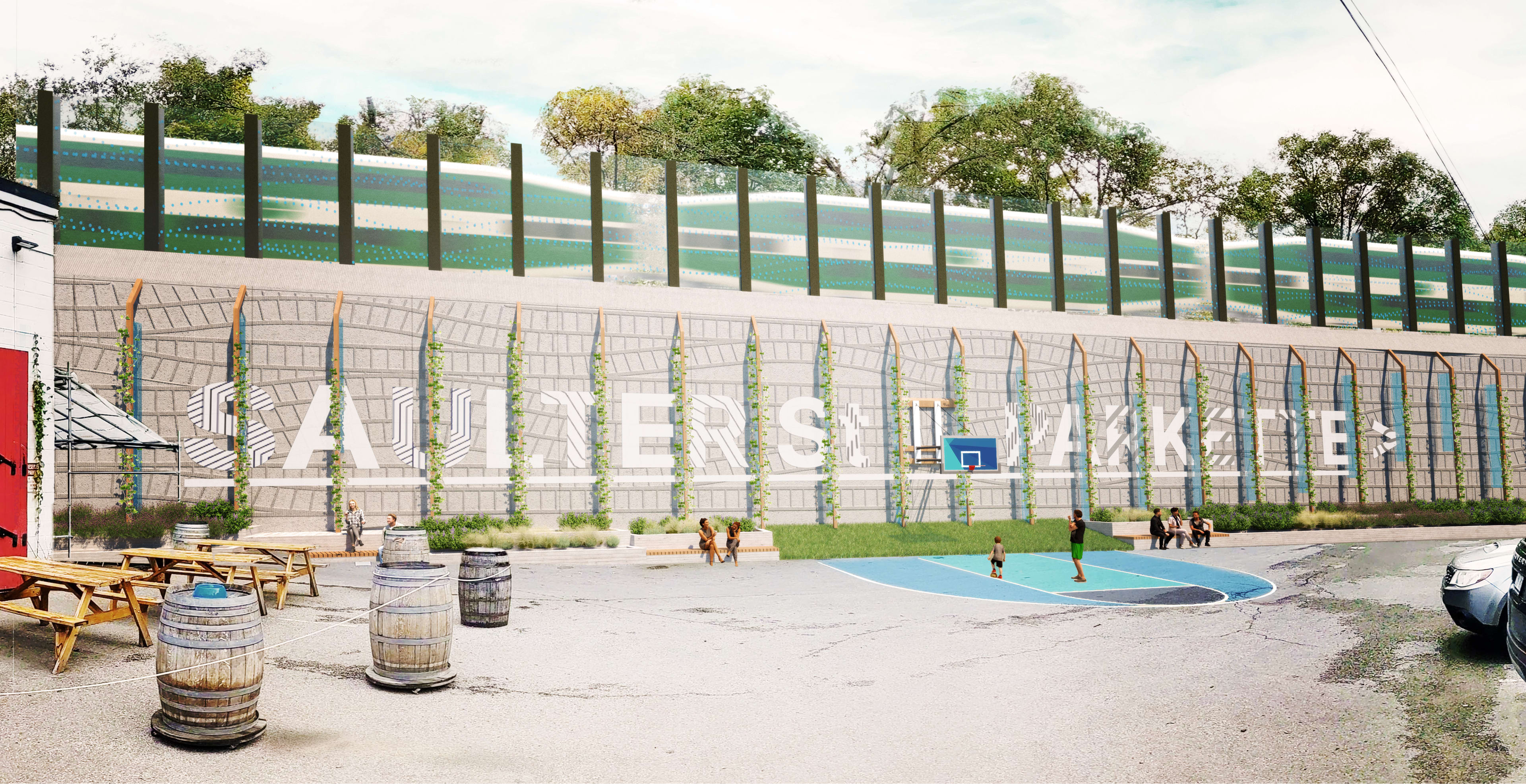
Artist’s rendering of the future retaining wall and noise barrier along the rail corridor in the Saulter Street Parkette. Additional park amenities pictured are conceptual.
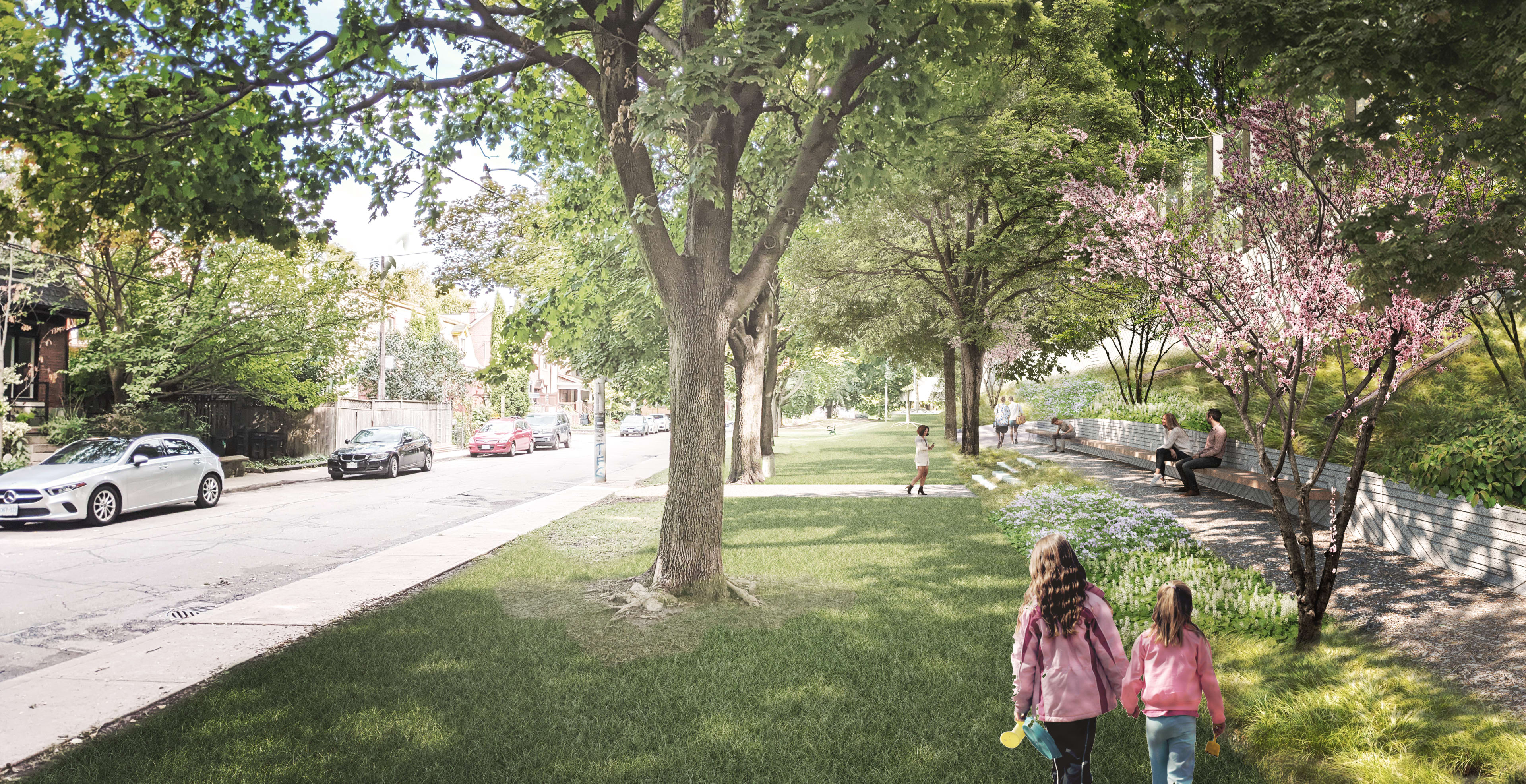
Artist's rendering of proposed future landscaping in Bruce Mackey Park to help conceal the visual impacts of the noise barriers and passing trains.
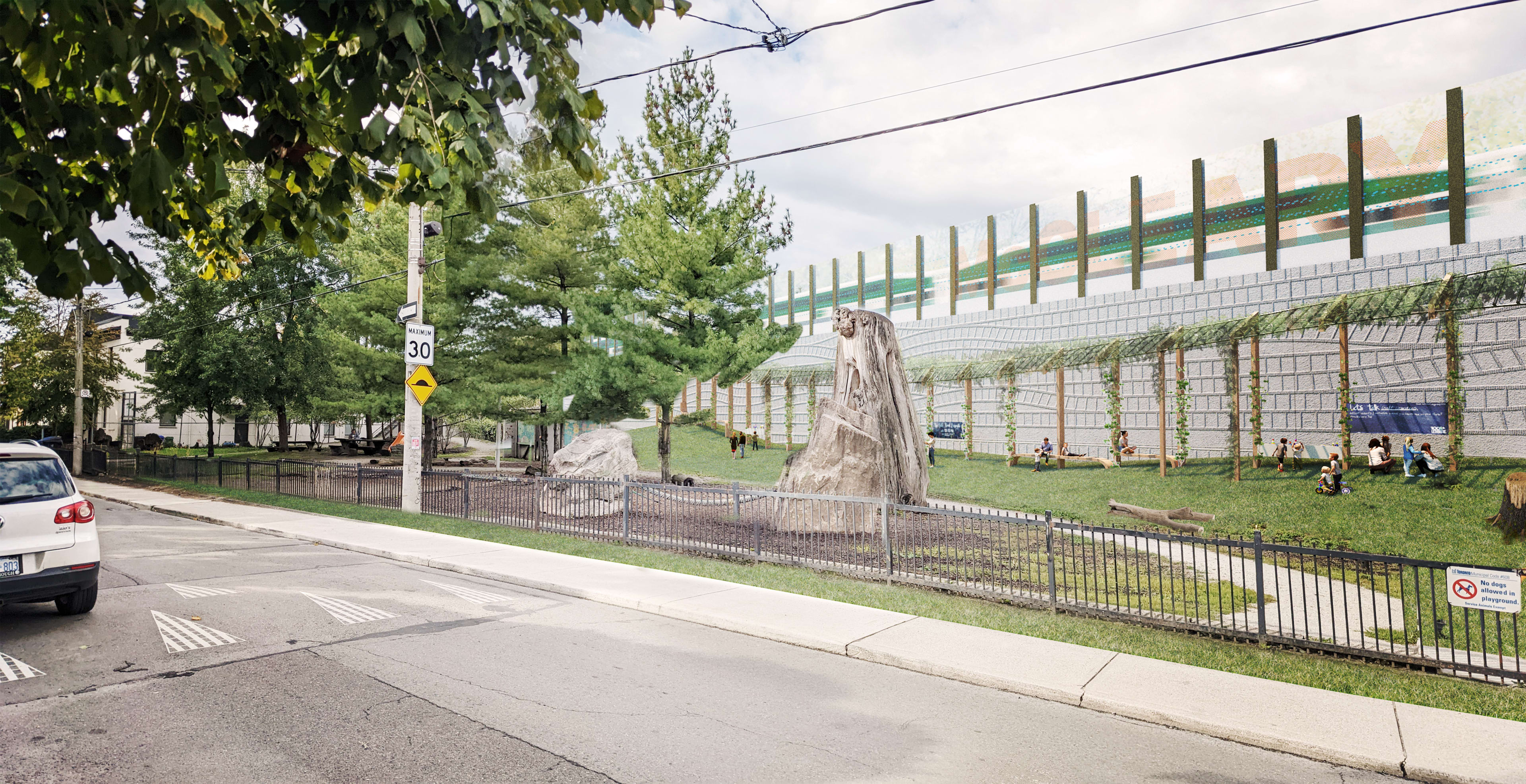
Artist's rendering of the future state of McCleary Playground with greenery and bird-friendly wayfinding on the retaining and noise walls. Additional park amenities are conceptual.
We will also use sustainable, low-carbon materials where possible, introduce intuitive wayfinding and lighting to create safe and inclusive spaces, and incorporate new vegetation and landscaping.
The goal is to create welcoming spaces around the corridor that reflect the community’s interests and priorities.
Before requesting design proposals, community members had a chance to take part in an online consultation to provide feedback on potential approaches for wall materials and nearby landscaping options from September 23 to October 24, 2021. Learn more about the design survey and the Joint Corridor Design Excellence Working Group here.
New rail bridges
New rail bridges at Eastern Avenue, Queen Street, Dundas Street and Logan Avenue have been built to support the future Ontario Line and increased GO train service.
These bridges were rebuilt to accommodate six tracks — four for GO trains and two for the Ontario Line, versus only three previously — which will allow for more transit service in the future.
The bridges we replaced were more than 100 years old and nearing the end of their useful lives, with the new bridges designed to last at least another century. They are also taller than the old bridges, making it easier for vehicles to move freely throughout the city’s roadways.
Construction timeline

Get in touch
We're committed to keeping you informed and engaged every step of the way as we build the Ontario Line.
Our team is here to answer your questions, address issues, and provide the information you need. Reach out to us any time at OntarioLine@metrolinx.com or via our 24/7 phone line: 416-202-5100.
Related Projects
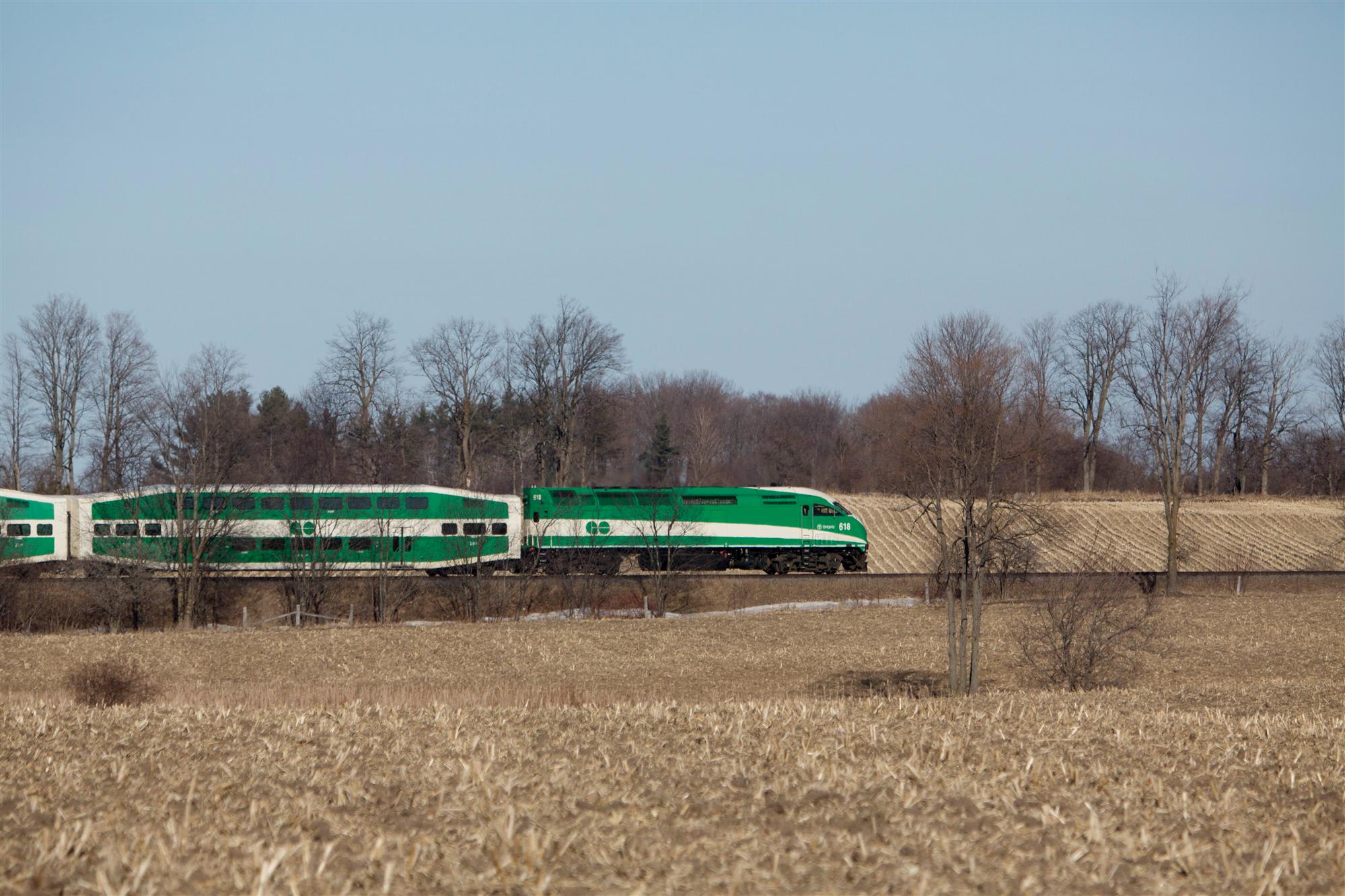
Improvements to Danforth GO Station will support increased GO service while improving station access

Land Acknowledgement
Metrolinx acknowledges that we connect communities by building and operating transit within the traditional lands of the Anishinaabe, the Haudenosaunee and the Wendat peoples, for whom these lands continue to have great importance. Treaties between First Nations and governments cover these lands, and the promises contained in these Treaties remain relevant to this day. Metrolinx and its employees are committed to understanding the history of these lands and the continued impacts of colonization and take responsibility for actions to advance reconciliation. Metrolinx will continue to seek the knowledge, expertise and experience of Indigenous partners and commits to doing business in a manner that is built on a foundation of trust, respect, and collaboration.