Share
Piling and excavation at Osgoode… again?
Digging into the excavation projects helping build an Ontario Line connection at Osgoode Station
Aug 12, 2026
We recently announced that shaft and cavern excavation for the future Ontario Line Osgoode Station is complete. So, as teams gear up to start piling and excavating again along University Avenue, you might be scratching your head and wondering:
Why are we starting the process all over again?
An underground station – especially a major interchange station like Osgoode- is not built by a single excavation. Instead, it is constructed in several interconnected sections, each serving a different purpose and requiring its own sequence of piling, excavation and structural construction.
Each part of Osgoode Station — the station shaft, cavern, ventilation shaft and TTC connection — is a separate underground structure. Each area is built independently, and crews have to repeat the same piling, excavation and permanent construction process in each location.
So, let’s dig into what’s going on at each of the Osgoode Station locations.
Station shafts and cavern (complete)
The first major phase of work involved piling and excavating the main station shafts and cavern. Together, these areas make up the large underground space that will house the future station platforms, concourse and other infrastructure such as elevators and escalators. It’s the space most people would consider “the station”.
To create this underground space, crews first installed piles to create stable retaining walls before excavating down 47 metres below street level and removing more than 120,000 cubic metres of soil and rock.
With excavation now complete, construction has transitioned to building the permanent station structure, including waterproofing, and concrete and steel work for the foundation, walls, and columns. One day, you’ll be standing on a subway platform down there.

Ventilation shaft (underway)
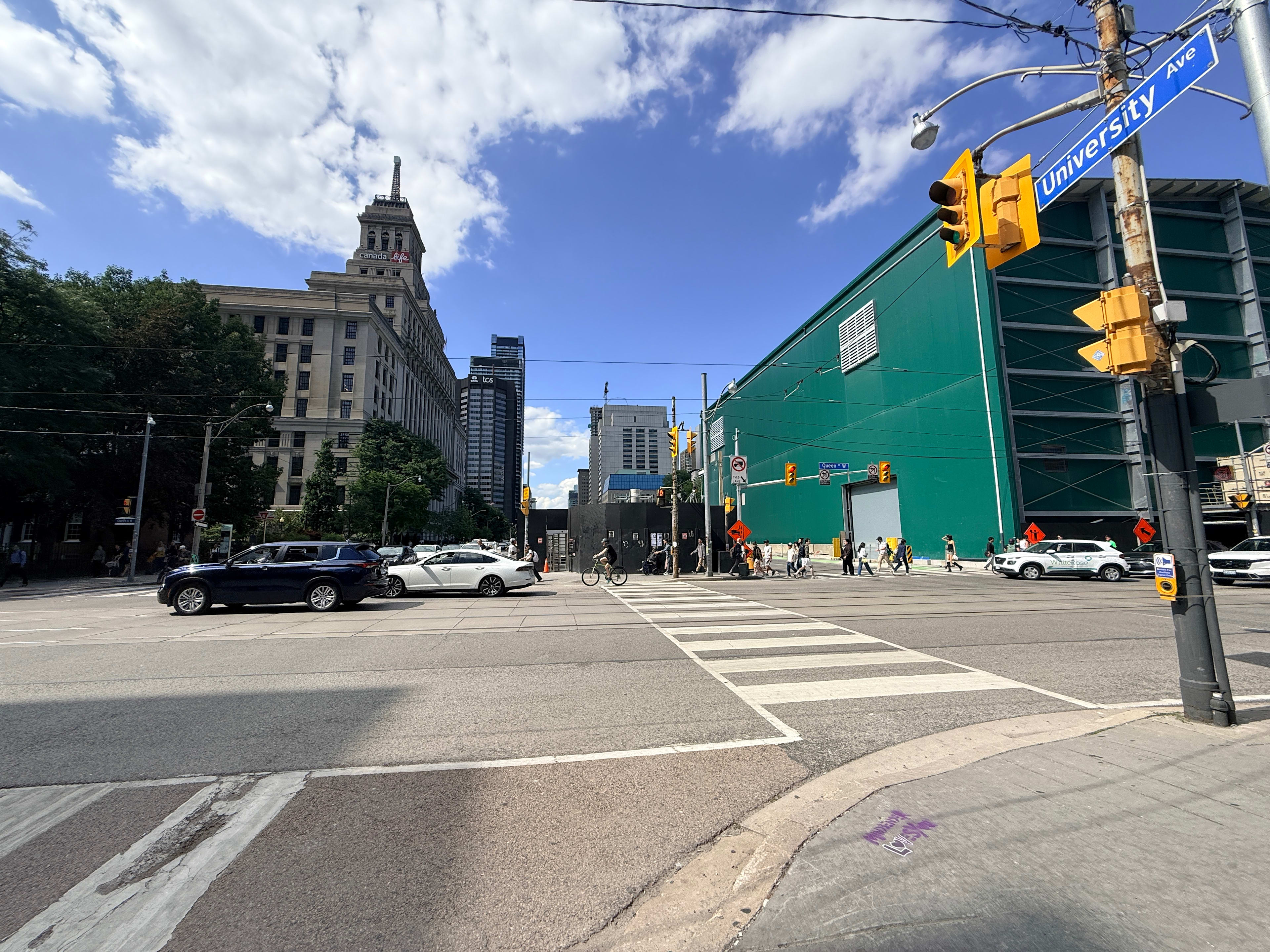
A separate ventilation shaft is also required as part of the station. Ventilation shafts are the air ducts in the sidewalk that allow air and heat to move into and out of the underground tunnels. They have a very important job for daily use as well as in emergencies. This one is located on the north side of Queen Street West near University Avenue.
After installing piles to support the excavation, crews are now excavating this area to create the underground space needed for the future ventilation system.

TTC Line 1 connection (next)
The next phase of work is to connect the future Ontario Line Osgoode Station to the existing TTC Osgoode station. This work extends beyond the footprint of the main station space and requires its own retaining walls and excavation.
The connection structure must link up with an existing operating station, requiring staged construction and careful integration with existing TTC structures. To safely create this new underground connection beneath University Avenue, crews must once again install piles before excavating the area. Once excavation is complete, permanent construction of the connection structure can begin.
All of this is happening below ground, without impacting service or subway operations at the existing TTC Osgoode Station.

Once complete, the new Ontario Line connection will help reduce crowding on Line 1 by facilitating seamless subway and ground transfers at Osgoode Station. We estimate about 5,700 people to make transfers during rush hour.
For more information about Ontario Line construction happening across the line, visit the notices page on our website and considering subscribing to our Neighbourhood Notices email list for construction news and updates specific to your community.