Share
Subway structures beyond the stations
Emergency exits, service buildings and operations facilities are just as vital for the Ontario Line.
Jun 17, 2026
Stations, tunnels and bridges might be the most recognizable parts of the future subway, but many other important structures are needed to make up the new Ontario Line.
From Liberty Village to Thorncliffe Park, there are construction sites in neighbourhoods across the city with major work underway on other important buildings that will keep the line running safely and smoothly.
Exhibition step-up substation
The Ontario Line’s main step-up substation will be located east of Exhibition Station and serve as the key powerhouse that will help keep trains running every day. The facility will take electricity from Toronto Hydro, convert it into high-power energy and send it directly to the tracks and southern stations.
In the event of a power failure at the operations, maintenance and storage facility (OMSF) in the north, the Exhibition substation is capable of feeding power to the entire subway line.
Ordnance emergency exit building
An emergency exit building (EEB) is being built between Exhibition Station and the future King West Station, next to Ordnance Park.
The stretch between these two stations is the longest in the downtown section of the line, and the Ordnance EEB is at roughly the halfway point. In case of an emergency, the EEB will allow for safe exit from the tunnels.
Don Yard emergency services building
At the east end of the Ontario Line’s downtown underground section, an emergency services building (ESB) will be located at the same site as the Don Yard tunnel portal.
The ESB will provide both an emergency exit for passengers in an evacuation, and an entry point for maintenance staff to service the line in the future.
Bain emergency exit building
In the city's east end, an emergency exit on Bain Avenue will provide passengers with a path out of the subway tunnels, and first responders with a path into them, if an evacuation is ever needed.
The Bain EEB will be built roughly halfway the Gerrard Station and Pape Station.
Sammon emergency services building
Heading north, an ESB at the southeast corner of Pape Avenue and Sammon Avenue will serve both as an emergency exit and access point for maintenance crews. It will also house mechanical and electrical components for Ontario Line operations.

Artistic rendering of the future ESB on Pape Avenue between Sammon and Aldwych avenues. (Metrolinx image)
The Sammon ESB will be located about halfway between Pape and Cosburn Stations.
Minton emergency exit building
A final emergency exit will be located right before the Ontario Line moves from underground subway tunnels to an elevated bridge over the Don Valley. The exit building will be built on Minton Place above the tunnel portal to provide a safe path in case of an emergency evacuation from the tunnels.

Artistic rendering of the future EEB and parkette on Minton Place above the tunnel portal, looking northeast. (Metrolinx image)
After work is complete on the tunnel portal and emergency exit building, the former construction site on Minton Place will be transformed into a parkette for the community.
Operations, maintenance and storage facility
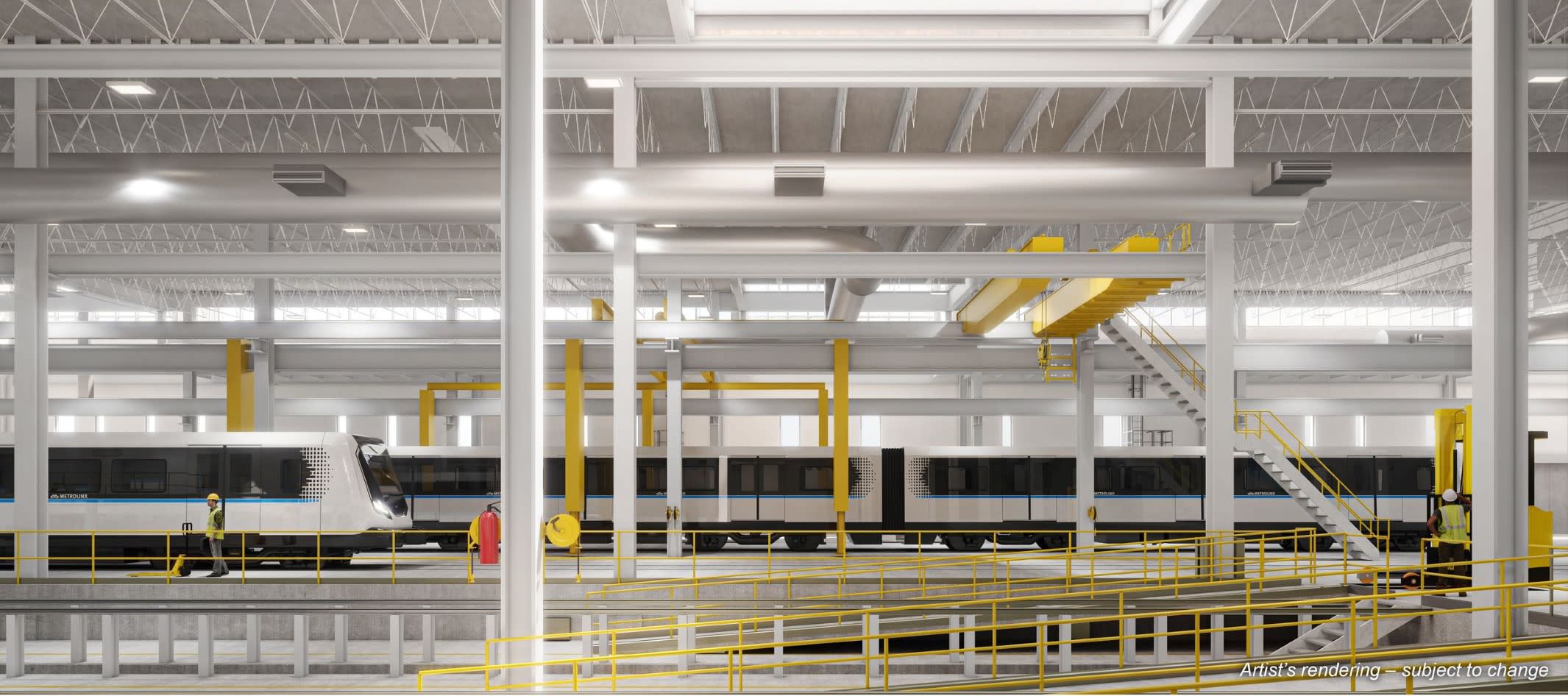
The Ontario Line’s operations, maintenance and storage facility (OMSF) will be located northeast of Thorncliffe Park Station, just west of Beth Nealson Drive. The OMSF is the operational nerve centre of the future subway line where trains will be cleaned, repaired and stored for daily service.
The 175,000-square-metre facility will support a fleet of 31 fully automated Ontario Line trains and serve as the headquarters for the teams responsible for operating and maintaining the line.
Three key buildings will make up the OMSF including a main operations facility, a train wash and a power station. Once complete, the facility will operate around the clock and support more than 388,000 daily passenger trips across the line.

Aerial view of OMSF site, looking southwest from Wicksteed Avenue. (Metrolinx image)
The OMSF will also receive power from Toronto Hydro and distribute it across the stations in the north. In the event of a power failure at the Exhibition substation in the south, the OMSF can power the entire line.
Smaller power substations are also located at subway station buildings across the Ontario Line, providing electricity to keep the lights, elevators, escalators, trains and other equipment running. In total, 18 substations will be needed to power the new subway line.
For updates on the Ontario Line, follow @OntarioLine, sign up for our newsletter or connect with us in person at a community office.