Share
Tunnelling the new Ontario Line from Liberty Village
Progress continues in west end with careful management of construction impacts
Jul 14, 2026
Tunnelling on the new 15.6-kilometre Ontario Line is in full swing, with both Libby and Corkie – the project’s first two tunnel boring machines (TBMs) – carving their path beneath downtown Toronto.
While Libby and Corkie make their way from Liberty Village toward the Don Yard portal, they’ll be digging nearly 6 kilometres of new twin tunnels beneath downtown Toronto. Throughout their journeys, teams will be hard at work keeping things running smoothly from the tunnelling control centre, also known as the tunnel launch shaft site.
But what exactly is going on at the launch shaft as crews support Libby and Corkie’s journey?
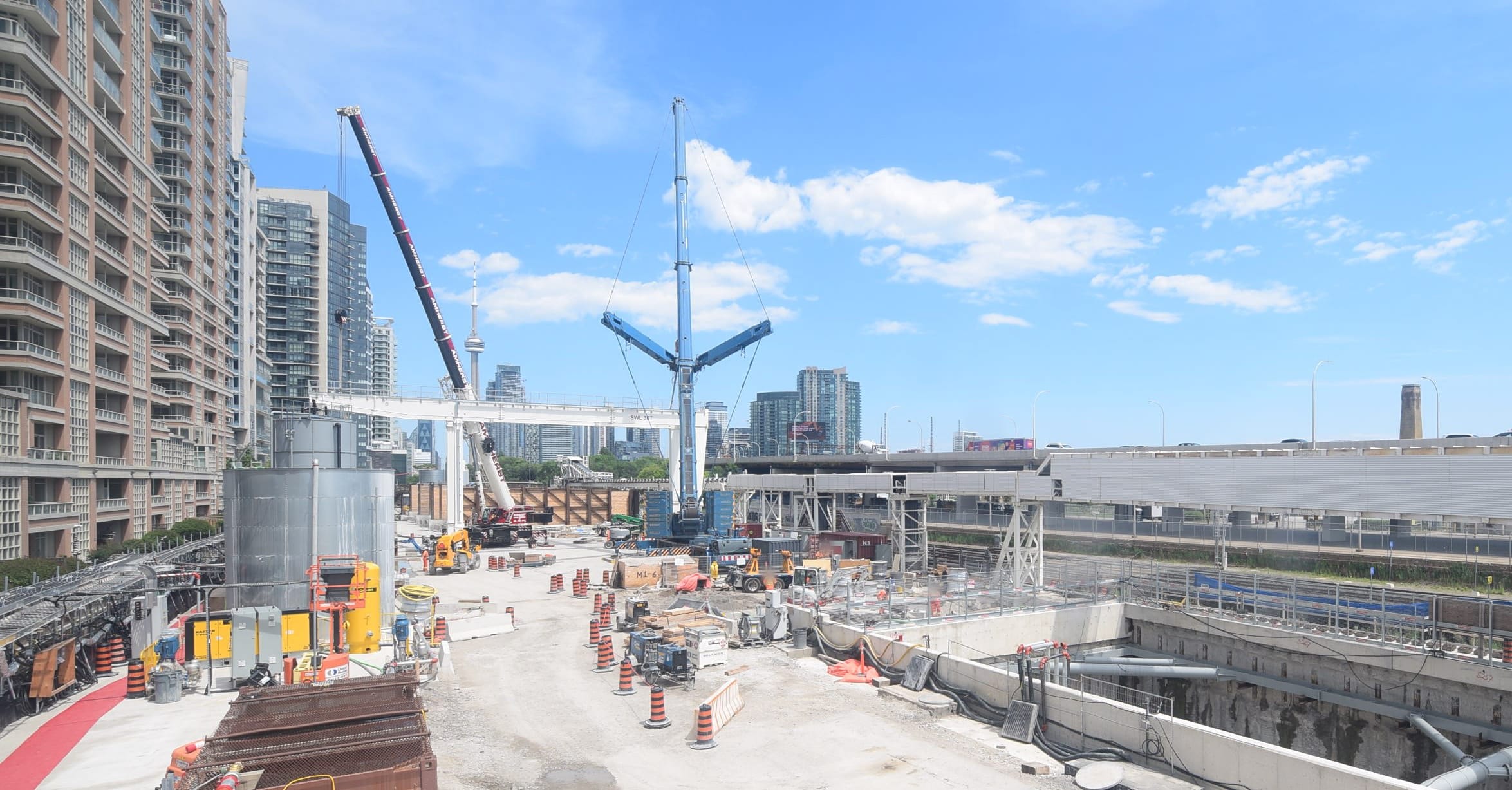
Located in Liberty Village, just north of the existing Exhibition GO Station and Lakeshore West train tracks, the tunnel launch shaft site is a bustling, complex and fast-paced work site with numerous crews, systems and processes operating in coordination to bring the Ontario Line to life.
Around-the-clock tunnelling
To properly manage around-the-clock tunnelling operations, teams had to build and install support structures within the site. These systems are essential to keeping things moving and will remain in place for the duration of tunnelling.
A partially enclosed conveyor system mounted on the side of the tunnels will carry excavated tunnelling materials – like dirt, soil and rock – from the TBMs into the muck pit.
The muck pit is a temporary storage space for the excavated materials carried out by the conveyors. This is also where trucks will load up the material to be hauled away.
The grout plant is where the grout mixture is prepared for use in the tunnels. As the TBMs move through the tunnel, they install each concrete tunnel segment, or liner. As the TBMs install the liners, they also inject grout into the gaps between them and the surrounding earth. The grout helps secure the lining while creating a more solid tunnel and preventing water from getting in.
There’s also a water treatment plant on site. It takes the dirty water created during tunnelling, cleans it, and makes it safe to either reuse on site or release back into the environment. Not only does this support tunnelling operations, but it helps protect rivers, lakes and other fresh water sources.
Listening and adapting
We recognize that building a subway line can affect how people live, work and move through the area during construction. That’s why we’ve put measures in place to help manage and reduce these impacts where possible.
As tunnelling runs around the clock with weekend maintenance, monitors are installed across the site to manage noise, vibration and air quality. These monitors allow teams to read levels and adjust work as needed. Our trucks use broadband – or white noise - backup alarms, which make a softer, less disruptive sound than traditional backup alarms.
We build with the community in mind and listen to feedback from residents and businesses, adjusting operations based on what we hear whenever possible. In some recent instances, when noise was determined to be disruptive, we installed additional noise blankets, relocated activities and adjusted work hours. We recognize that not all noise is experienced in the same way, and we respond where feasible to reduce impacts.
Dust and mud controls
Limiting dust on the construction site and keeping city streets clean is a priority. At Exhibition, the haul road contained within the construction site – running from Dufferin Street to Strachan Avenue – is fully paved, helping prevent dust and mud from spreading. This also allows a street sweeper and water truck to operate regularly within the site and nearby streets to keep the dust down.
During tunnelling, crews regularly water down soil and introduce additional controls for hot, dry, or windy days as needed.
Tunnel support infrastructure also plays a role in dust and noise control:
- The conveyor system and muck pit are both partially enclosed to contain noise and dust when working after 11 p.m.
- Trucks will be loaded inside the muck pit structure, reducing noise, and the chance of debris leaving the site.
- The water treatment plant and workshops are enclosed for similar reasons.
Traffic safety
Traffic control personnel are stationed at the site gates where required to manage truck movements, pedestrian and cyclist safety.
Metrolinx developed a Truck Safety Plan that sets consistent standards for truck operations across the city. Truck routes are established in coordination with the City, prioritizing major roads and direct access to highways. All drivers must complete mandatory truck‑route training before starting work to confirm their understanding of approved routes and compliance requirements. Contractors also provide regular driver briefings to reinforce safety expectations.
What’s next
Work at the tunnel launch shaft will be ongoing until tunnelling completion. Residents and members of the Liberty Village community are welcomed and encouraged to sign up for our Neighbourhood Notices mailing list to be kept up to date as things change and progress at the site.
Questions and concerns can always be shared with our community engagement team through the 24/7 phone line 416-202-5100 or by emailing OntarioLine@metrolinx.com.