Shaping future underground transit
How we’re using steel and concrete to create Ontario Line stations underground.
Nov 20, 2026
At the future Ontario Line King West and Chinatown stations, we’ve moved beyond the excavation phase, where work was focused on digging out space, and have turned our attention to building things back up – using a lot of concrete and steel.
But how do you pour concrete into a hollowed-out underground cavern to create a subway station?
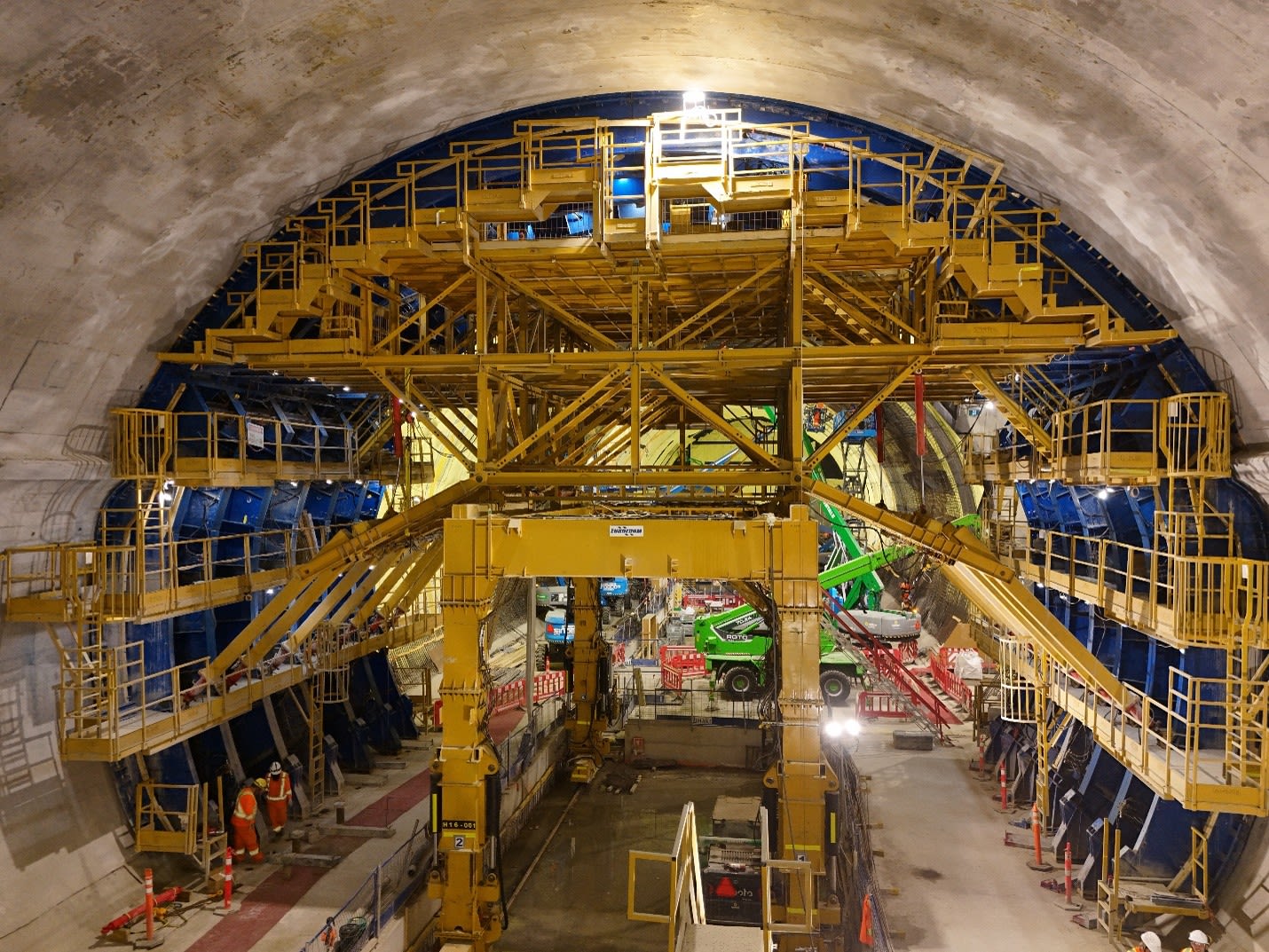
That’s where large temporary steel structures – known as crown lining formwork – come in.

Crown lining formwork at King West Station. (Metrolinx photo)
But what exactly is crown lining formwork, and how does it work?
Crown lining formwork is a specially designed temporary system used to shape and support freshly poured concrete until it gains enough strength to support itself. In underground station caverns, it is built to match the curved profile of the station roof, also known as the crown.
Once the concrete is poured into the mould and cured, the formwork system moves forward to the next section, gradually creating the permanent concrete arch that will become the underground station.
- curved steel panels that match the geometry of the cavern roof;
- structural steel frames that support the panels;
- hydraulic jacks and support mechanisms used to position and remove the formwork; and
- integrated openings and pipe connections used during concrete placement.
Preparing for the concrete pour
Before any concrete can be poured, several important steps take place to prepare the cavern. First, crews install a waterproofing membrane. This membrane helps protect the future station structure from groundwater seeping in.
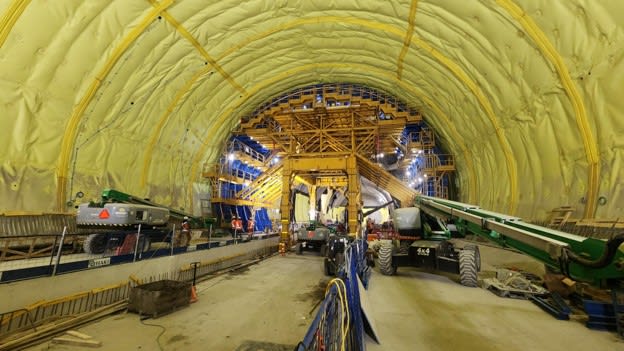
Waterproofing and crown lining formwork at King West Station. (Metrolinx photo)
Next, reinforcing steel bars, or rebar, are installed to provide additional strength to the permanent concrete lining. Once these elements are in place, the crown lining formwork is assembled and positioned within the cavern.

Rebar installation at Chinatown Station. (Metrolinx photo)
Moving through the cavern
The crown lining formwork is mounted on a traveller system, a large steel structure that sits on rails inside the cavern. After each concrete pour, the system rolls forward to the next section, allowing crews to repeat the process and gradually build out the station’s final concrete lining.

View from beneath the formwork at Chinatown Station. (Metrolinx photo)
Progress at King West and Chinatown stations
At both the future King West and Chinatown station caverns, crews have been advancing crown lining activities, including waterproofing installation, rebar placement and concrete pours to create the permanent station structure.

A look at some completed concrete work at King West Station. (Metrolinx photo)
While most of the work takes place out of public view, crown lining formwork is one of the key technologies helping transform excavated caverns into fully built transit stations. Each concrete pour brings the project one step closer to completion, creating the permanent structures that will one day support your ride on the Ontario Line.