Share
Building a new subway for Toronto – one ring at a time
Tunnel rings are a commitment to a lifelong subway partnership with Torontonians
Nov 25, 2026
When people think about tunnel boring machines (TBMs), they often picture the giant rotating cutterhead that carves its way beneath the ground. But behind the cutterhead, a very impressive and complex operation is taking place to turn underground cavities into sturdy subway tunnels.
As the first two Ontario Line TBMs, Libby and Corkie, move beneath downtown Toronto, they’re building the first underground subway tunnels for downtown Toronto in 60 years – one ring at a time.

TBM cutterhead arrived at Exhibition launch shaft before assembly.
What is a tunnel ring?
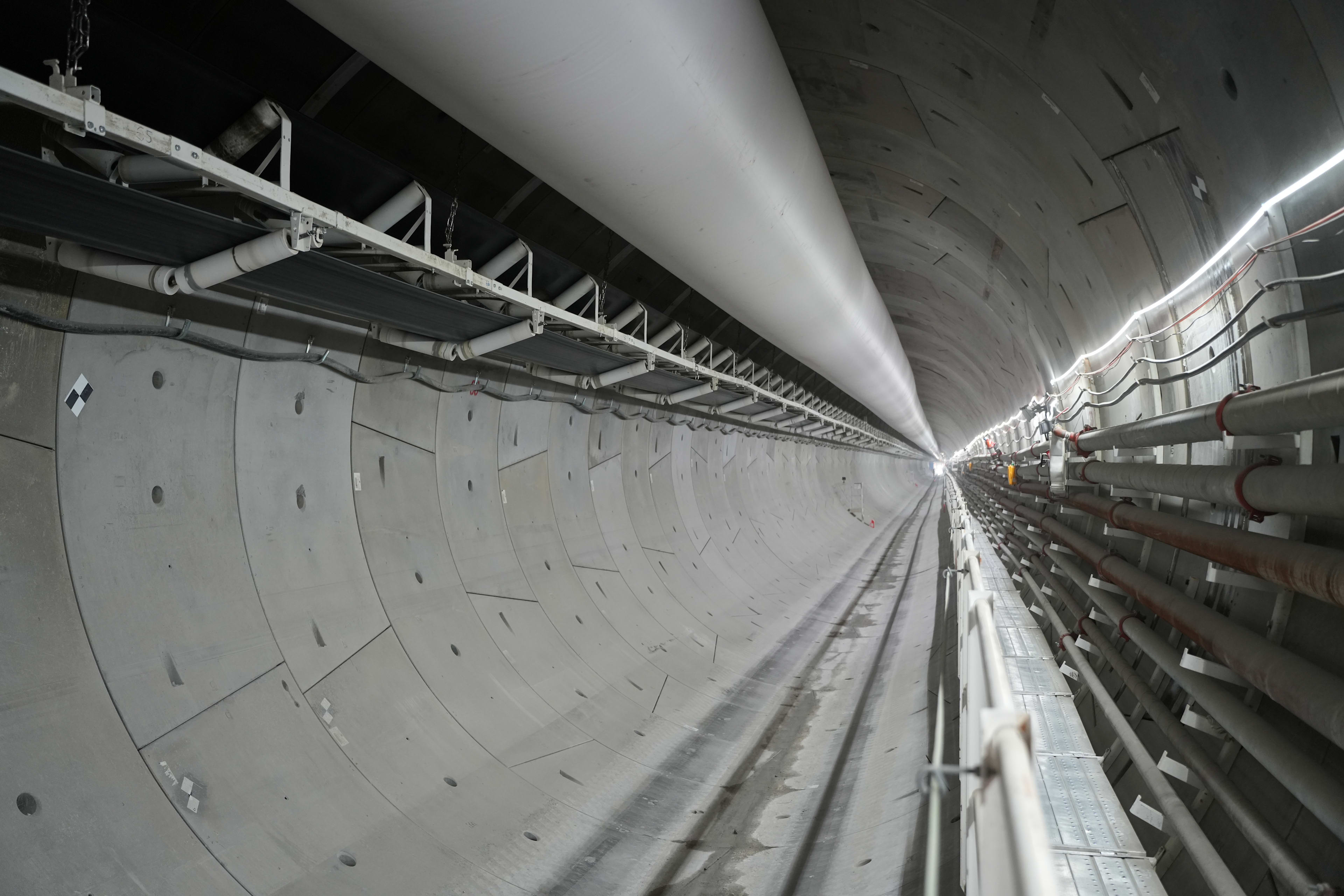
The tunnel ring is the structure that forms the tunnel’s circular wall, which will create a sturdy foundation for the subway tracks by supporting the ground around the tunnel. Each ring is made up of six precast concrete segments that fit together like pieces of a puzzle.
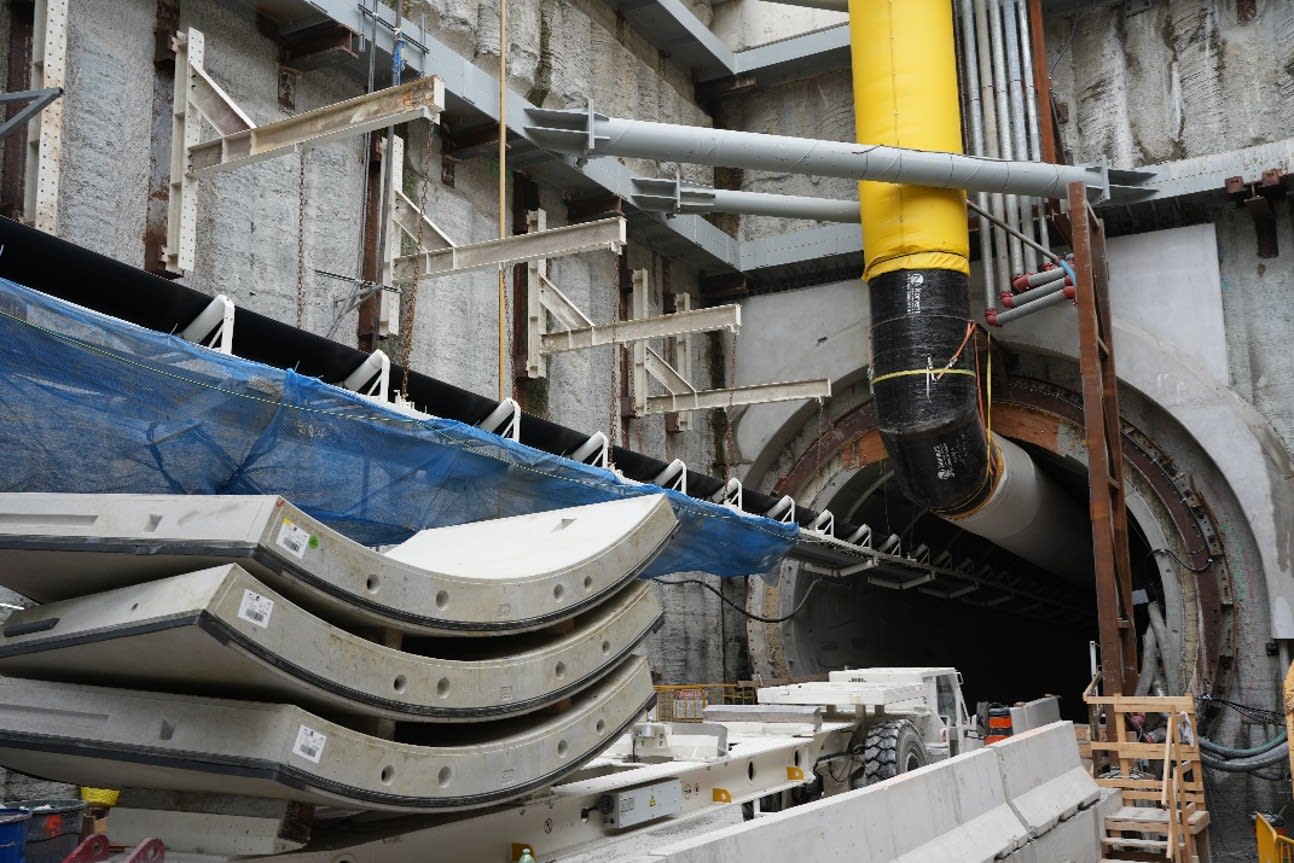
Tunnel ring liners preparing for installation in the Ontario Line tunnels east of Exhibition.
For the Ontario Line tunnels, each completed ring has an internal diameter of approximately six metres and an external diameter of 6.6 metres. Every completed ring puts us 1.7 metres closer to the end of the tunnel.
A constant supply of segments must be maintained as the TBMs continue tunnelling -- it's like keeping a construction assembly line running far below the city's surface. The storage and loading area is at Exhibition Station, where two large cranes lower the segments into the tunnel portal before they make their way under downtown Toronto.
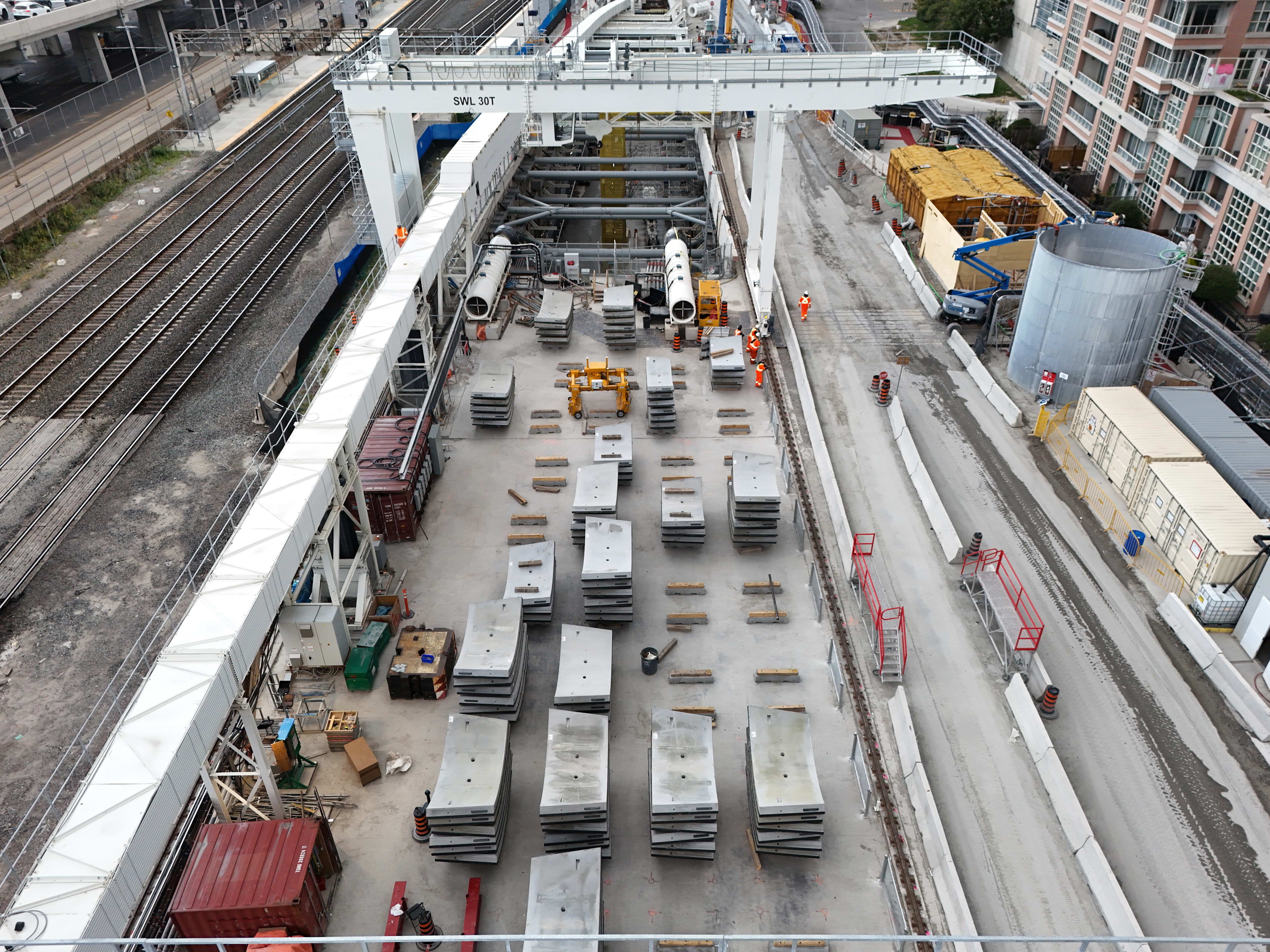
Tunnel ring segments beneath the gantry crane waiting to be brought into the tunnel.
Building the tunnel rings
When it comes to their journeys, multi-service vehicles (MSVs) transport the precast concrete tunnel segments from the portal to the TBM. From there, the segments are moved to the front of the machine, where the real precision work begins.

MSV transporting tunnel ring segments to the TBM.
Inside the TBM is a specialized piece of equipment known as the erector -- a robotic arm that builds the tunnel rings. Using vacuum suction plates, the erector lifts each segment and carefully places it into position. Each segment must be positioned with accuracy to ensure the ring fits together perfectly and can withstand the forces acting on it underground.

Tunnel ring segments inside the TBM, waiting to be installed.
One by one, the segments are installed to form a complete tunnel ring. As each segment is placed, hydraulic cylinders are extended from the TBM to apply pressure and help secure the rings. As excavation continues, crews continually repeat this process, building another ring directly in front of the last ring. This cycle of excavation, assembly, and advancement enables the tunnel to grow steadily beneath the city.

Inside the tunnel with completed tunnel rings.
While the TBM may be the star of the show, the tunnel rings transform an excavated cavity into a lasting piece of transit infrastructure. From delivery and storage at the surface to precision installation deep underground, every segment plays a critical role in building the Ontario Line.