• Text Size

Benefits Case Analyses

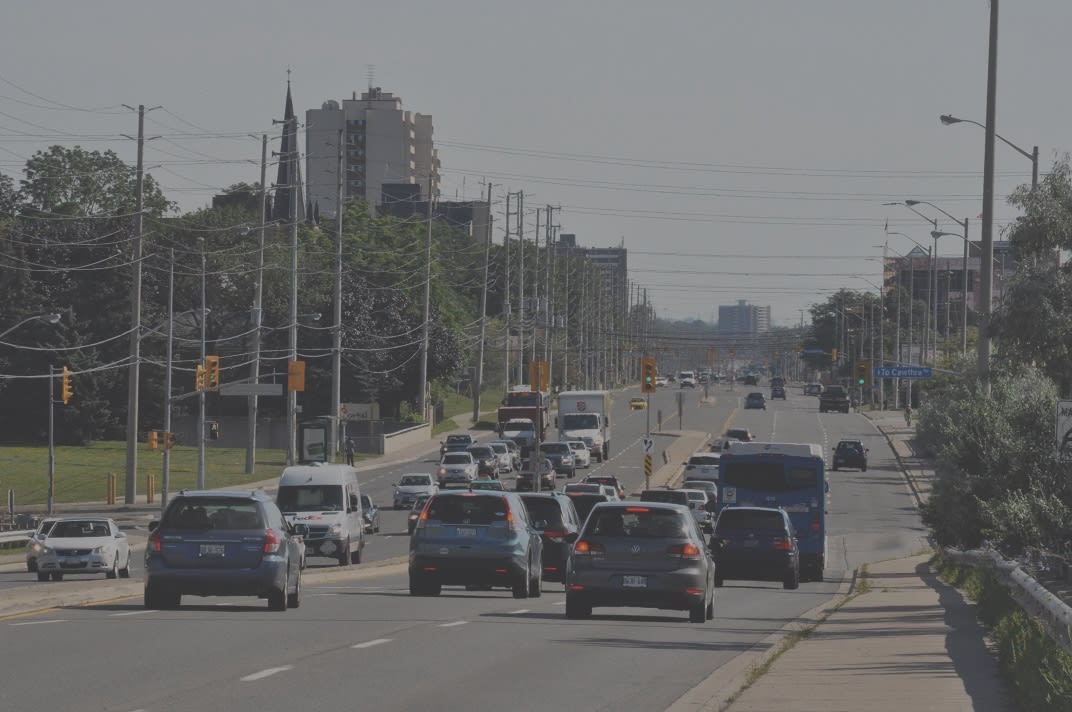
City street

A Metrolinx Benefits Case Analysis is completed for each project identified in The Big Move, a Regional Transportation Plan, to evaluate the project’s return on investment. The evaluations are undertaken in partnership with municipal stakeholders and their respective transit agencies.

When it comes to making decisions on these capital intensive infrastructure projects, the costs and benefits of all reasonable alternatives need to be evaluated so that the best version of these transit projects are built. The Metrolinx Benefits Case Analyses provide decision makers with a robust and consistent "triple bottom line" evaluation of the relative environmental, economic and social impacts of each Big Move project. The results from this stage of analysis are used to inform whether the project should move to the next stage of Planning, Design and Engineering.

The Benefits Case Analysis Reports for the projects done to date can be downloaded below:
Dundas Street Benefits Case Analysis Report
Durham-Scarborough Benefits Case Analysis Report
GO Rail Benefits Case Analysis Report
Hurontario-Main Benefits Case Analysis Report
Hamilton King-Main Benefits Case Analysis Report
Sheppard-Finch Benefits Case Analysis Report
GO Lakeshore Benefits Case Analysis Report
Yonge North Subway Extension Benefits Case Analysis Report
Scarborough RT Benefits Case Analysis Report
VIVA Benefits Case Analysis Report

Dundas Street Benefits Case Analysis Report

Dundas Street Benefits Case Analysis ReportThe Dundas Street Rapid Transit project was identified in The Big Move, a Regional Transportation Plan, as a Metrolinx priority project. The project envisions higher order rapid transit from Kipling station in Toronto along a 37 km stretch of Dundas Street to Hwy. 407 in Burlington.

The Dundas Street Benefits Case Analysis examined four options – Bus Rapid Transit (BRT) Light where buses operate in mixed traffic; full BRT from Kipling to Hurontario where buses operate in a dedicated lane with BRT Light from Hurontario to Hwy. 407; Light Rail Transit (LRT) from Kipling to Hurontario and BRT Light to Hwy. 407; and fully separated BRT along the whole corridor. All BRT options generate positive benefits for the transportation user, and positive financial, environmental, economic and socio-community impacts for the corridor.

Metrolinx staff will continue to work collaboratively with municipal and regional partners on developing the detailed planning, design, engineering workplan.
Full report

Durham-Scarborough Benefits Case Analysis Report

Durham-Scarborough Benefits Case Analysis Report The Durham-Scarborough Bus Rapid Transit (BRT) project was identified in The Big Move, a Regional Transportation Plan, as a Metrolinx priority project. The project involves 36 km of higher order rapid transit from Scarborough Centre Station in Toronto along Ellesmere Road and Hwy. 2 through Durham Region to downtown Oshawa linking Scarborough, Pickering, Ajax, Whitby and Oshawa together.

The Durham-Scarborough Benefits Case Analysis results showed that two of the three options evaluated – full BRT and partial BRT throughout Durham and Toronto – generate positive benefits for the transportation user, and positive financial, environmental, economic and socio-community impacts for the corridor as a whole.

Metrolinx staff will continue to work collaboratively with municipal and regional partners on developing the detailed planning, design, engineering workplan.
Full report

GO Rail Benefits Case Analysis Report

GO Rail Benefits Case Analysis Report The GO Rail Benefits Case Analysis assesses improvements to GO rail service along the Barrie, Milton, Richmond Hill and Stouffville lines as well as the Lakeshore East Bowmanville extension as identified in The Big Move, a Regional Transportation Plan, as Metrolinx priority projects. For each of these corridors, the costs and benefits of improvements to two-way, all-day service were explored for the full corridor length with the exception of Richmond Hill, which included the extension to Bloomington Road, and Stouffville that looked at both two-way, all-day service to Unionville and Lincolnville.

The results showed that the improvement to two-way, all-day service on the Barrie, Milton, and Richmond Hill lines would generate positive benefits along the corridor. For the Stouffville line, the analysis showed that the benefits from service improvements along this corridor to Unionville station would balance the incurred costs, while the results from the Bowmanville extension showed that the benefits of two-way, all-day service did not outweigh the costs.

Metrolinx together with its operating division, GO Transit, used this analysis to inform the work done in the Electrification Study. It will continue to work collaboratively to further develop the planning, design and engineering along these corridors.
Full report

Hurontario-Main Benefits Case Analysis Report

Hurontario-Main Benefits Case Analysis ReportThe Hurontario-Main Rapid Transit project was identified in The Big Move, a Regional Transportation Plan, as a Metrolinx priority project. The project envisions higher order rapid transit from Port Credit to Downtown Brampton along the Hurontario-Main corridor.

The Hurontario-Main Benefits Case Analysis evaluated three options – full Light Rail Transit (LRT), full Bus Rapid Transit (BRT) and an option with LRT in the southern segment and BRT in the northern segment. Both the full LRT and mixed LRT/BRT options generate positive benefits for the region and will be capable of accommodating long-term travel demand growth along the corridor. The full BRT option will not be capable of meeting projected 2021 capacity requirements.

Metrolinx staff will continue to work with Mississauga and Brampton on developing the detailed planning, design, engineering workplan.
Full report

Hamilton King-Main Benefits Case Analysis Report

Hamilton Benefits Case Analysis Report The Hamilton King-Main Rapid Transit was identified in The Big Move, a Regional Transportation Plan, as a Metrolinx priority project. The project envisions rapid transit between Eastgate Square and McMaster University via Downtown Hamilton along the Main Street/King Street corridor.

Rapid transitThe Hamilton King-Main Benefits Case Analysis demonstrated that all three options under evaluation – full Bus Rapid Transit (BRT), full Light Rail Transit (LRT) and partial LRT – will generate positive benefits for Hamilton and the region. All three options will be capable of accommodating long-term travel demand growth in the corridor.

Metrolinx staff will continue to work collaboratively with Hamilton on the detailed planning, design, and engineering workplan for the King-Main corridor.
Full report
Consultation boards
Scheme plans

Sheppard-Finch Benefits Case Analysis Report

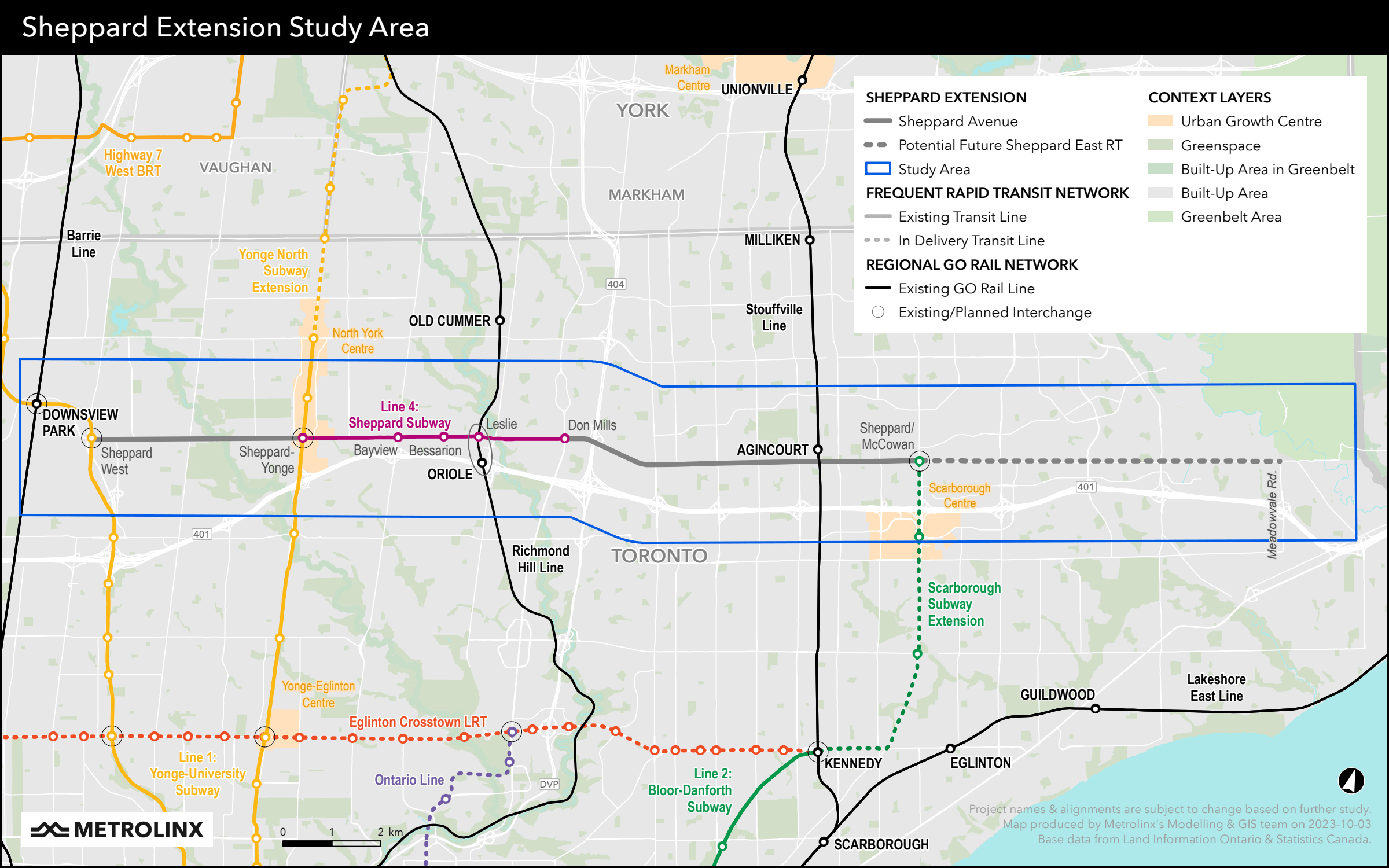
Sheppard-Finch Benefits Case Analysis Report The Sheppard-Finch Light Rail Transit project was identified in The Big Move, a Regional Transportation Plan, as a Metrolinx priority project. The Benefits Case Analysis considers multiple rapid transit investment options for the Sheppard East and Finch corridors. The project envisions rapid transit along Sheppard Avenue East and Finch Avenue West.
The analysis demonstrated that a continuous Light Rail Transit line that connects Sheppard East to Finch West via Don Mills Road generates the most benefits for cost. This option is recommended for next steps towards implementation.
Full report

GO Lakeshore Benefits Case Analysis Report

GO Lakeshore Benefits Case Analysis Report Electrified, express rail service in the Lakeshore corridor was identified in The Big Move, a Regional Transportation Plan, as a Metrolinx priority. As envisioned, the project would transform service in the Lakeshore corridor from Hamilton to Oshawa with fast, frequent electric trains replacing current diesel operations over time.

The Lakeshore Express Rail Benefits Case Analysis provides an evaluation of the comparative costs and benefits of potential service improvement alternatives in the short to medium term and for the ultimate Lakeshore express rail vision.

The Lakeshore Express Rail project will be considered within the broader context of the GO rail network, and as such, the Benefits Case Analysis is one of the many inputs to the GO Electrification Study,  that was completed and released in January 2011.
Full report

Yonge North Subway Extension Benefits Case Analysis Report

Yonge North Subway Extension Benefits Case Analysis ReportThe Yonge North Subway Extension was identified in The Big Move, a Regional Transportation Plan, as a Metrolinx priority project. The Yonge North Subway Extension Benefits Case Analysis provides an evaluation of the comparative costs and benefits of rapid transit service options northwards to Richmond Hill Centre.

The Yonge North Subway Extension needs to be considered within the broader context of the Yonge North corridor, and as such, the Yonge North Subway Extension Benefits Case Analysis will be a key input to further work being carried out in partnership with York Region, the City of Toronto, and the TTC to identify the best project scope and phasing for improving rapid transit in the Yonge North corridor.
Full report

Scarborough RT Benefits Case Analysis Report

Scarborough RT Benefits Case Analysis Report The Scarborough Rapid Transit (RT) project was identified in The Big Move, a Regional Transportation Plan, as a Metrolinx priority project. The Benefits Case Analysis considers different investment options for replacing and extending the Scarborough RT service.

The existing vehicle fleet is aging and must be replaced and modified, and there is an opportunity to extend service toward Malvern Town Centre. The analysis looks at the investment merits of two technologies (Mark II and Light Rail Transit vehicles) and different extension scenarios to connect with Malvern Town Centre. The Benefits Case Analysis measures benefit-to-cost ratios of these options and also includes broader “triple bottom line” economic, environmental and social impacts.
Full report

VIVA Benefits Case Analysis Report

VIVA Benefits Case Analysis Report The VIVA Benefits Case identifies the optimal investment scenario for York Region’s rapid transit system on Hwy. 7 and Yonge corridors.

The Benefits Case Analysis analyzes two scenarios in York Region, both where existing VIVA services will be upgraded to rapid transit to create an east-west spine on Hwy. 7, connecting with Züm on Queen Street to downtown Brampton, and from Newmarket to Richmond Hill Centre along Yonge Street. Under one scenario, the project is to be fully built by 2018, with the other scenario deferring construction of certain segments to 2026. While delaying construction returns a higher cost-benefit ratio, both options are feasible for moving forward.

Since the release of this Benefits Case Analysis, York Region has received $1.4 billion in funding from the Province to construct the rapidways envisioned in the deferred construction scenario.
Full report